
Ambulotherapy
Walking as a therapeutic tool for health, disease, body composition, and more...

If there was a pill or therapy that could protect against/prevent (nearly all) disease, improve body composition, and completely shift your mental state then it would be locked away and either gatekept or scrubbed from existence. However you already partake in this sort of therapy every single day —hopefully— as life would be incredibly difficult without it.
I’m talking about familiar act of walking, something that you’ve done your entire life often without second thought. You likely walk everywhere you go, unaware of the benefits of doing so, because that’s just what you do. However, just a little appreciation to what goes into and what comes out of walking can change your perspective on the act, potentially inspiring you to engage in it a little more.
Walking is one of the most comprehensively effective ways to improve your health, feel better, and enhance the function of your brain —all for free. There is good reason why some of the greatest minds in history have advocated for walks, whether it be for thought or general well being. Few things, if anything, can match the combination of simplicity and effectiveness of the humble walk.
History
Humans are built to walk as it is one of our defining features in comparison to other animals. walking on two legs is perhaps the biggest reason for the rapid evolution and advancement of the species. Going from subsisting on the environment to exploring the stars over a few thousand years. Walking accomplishes a few things:
Reducing the cost of travel
Freeing up the use of hands
To start, bipedal locomotion is incredibly efficient in comparison to quadrupedal locomotion. Standing and walking on the hind limbs essentially allows one to fall forward with each step, recycling much of the spent energy via fascia and other elastic connective tissue. This drastically reduces energy demands for movement, giving humans the ability to cover vast distances at relatively little cost.
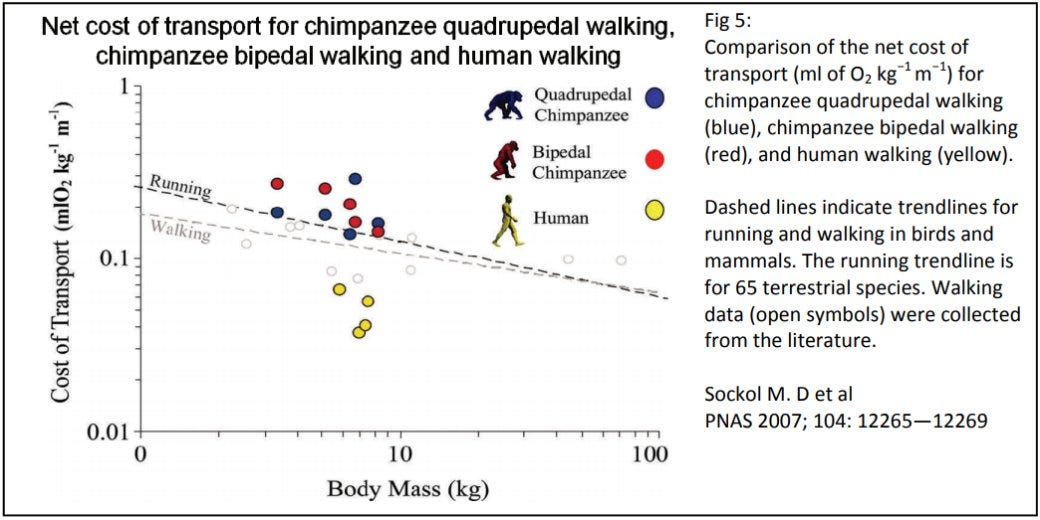
Energetically cheap movement allows for exploration and play to be more accessible, expanding the potential for growth and discovery. When you aren’t spending as much energy on moving you can direct it elsewhere. For humans of the distant past this was important as calories were far harder to come by than today. Any spare energy could then be used for growth and further adaptation of structures like the brain.
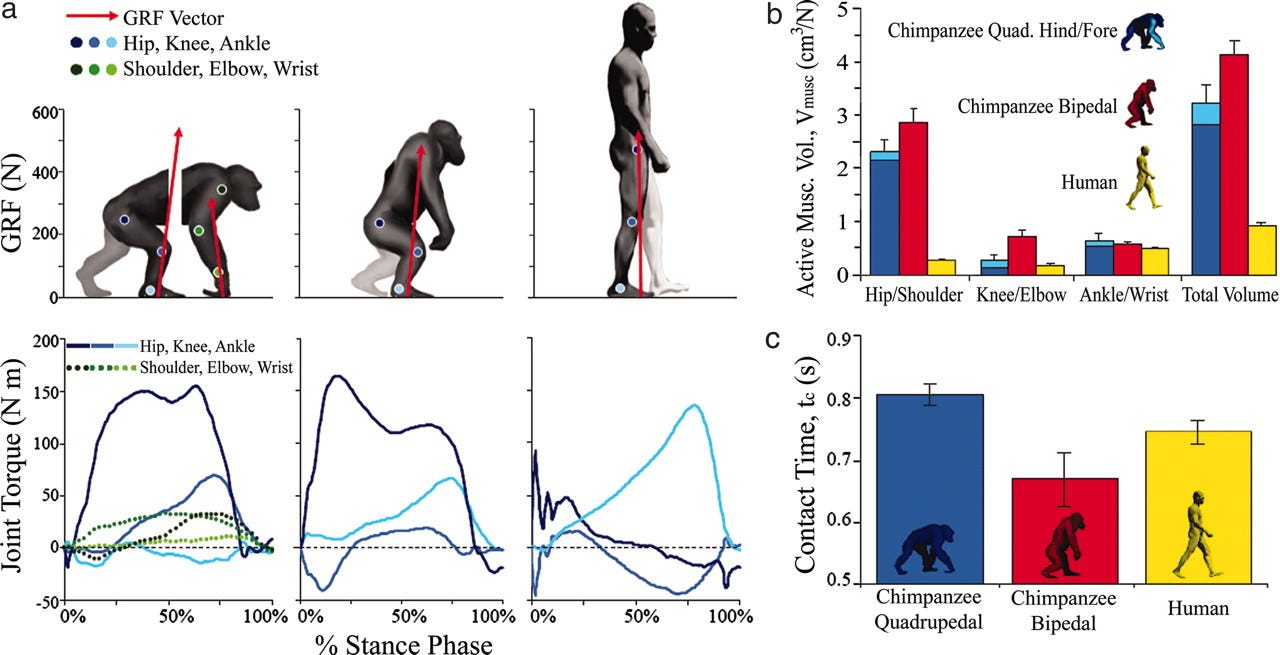
Another benefit of bipedal gait is the freeing of the arms, which are no longer required to interface with the ground. This allows the hands to be used for other things like manipulating the environment, crafting tools, hurling weapons and so on. Over time the more clumsy and robust hands became far more adept and dexterous, further advancing these skills.

The development of skills associated with these complex tasks is made possible, in part, by the energy freed up from locomotion. The fruits of these skills —improved resource gathering/refinement, protection, and more— compound and support means to grow the brain. The resource intensive processes of growing and refining nerve tissue became more accessible because of these synergies.
When you put these together it becomes undeniable that bipedalism and walking was a major contributor to the rise of man and the explosion in mankind’s technological development. The ability to walk allows for the maintenance of this higher state as without it you would be condemned to grovel on the ground, spending much of your energy just getting from place to place instead of molding the world in your favor.
The Anatomy
Walking altered human anatomy, which shaped itself to conform and optimize itself around it. The current human form is best built to walk above all else. Yes you can crawl, you can run, and you can swim, but you can walk for miles with minimal fatigue.
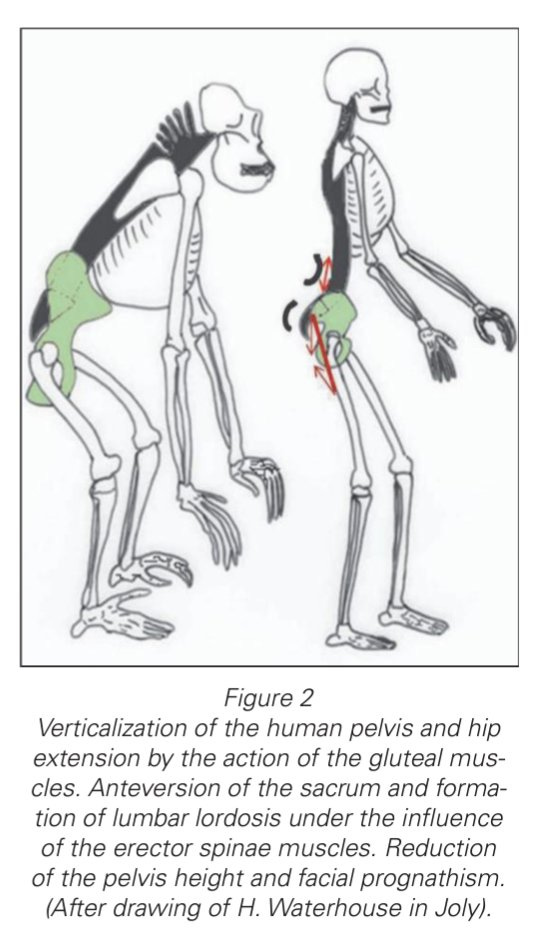
These features include long legs, developed glutes, and a lordotic curve of the lumbar spine. The characteristic adaptations for walking are simultaneously cues we look for and often find attractive in other people. Short, stocky legs, atrophied glutes, and a lack of a lordotic curve in the lumbar spine are relatively unattractive, as these suggest that the individual would struggle walking effectively.

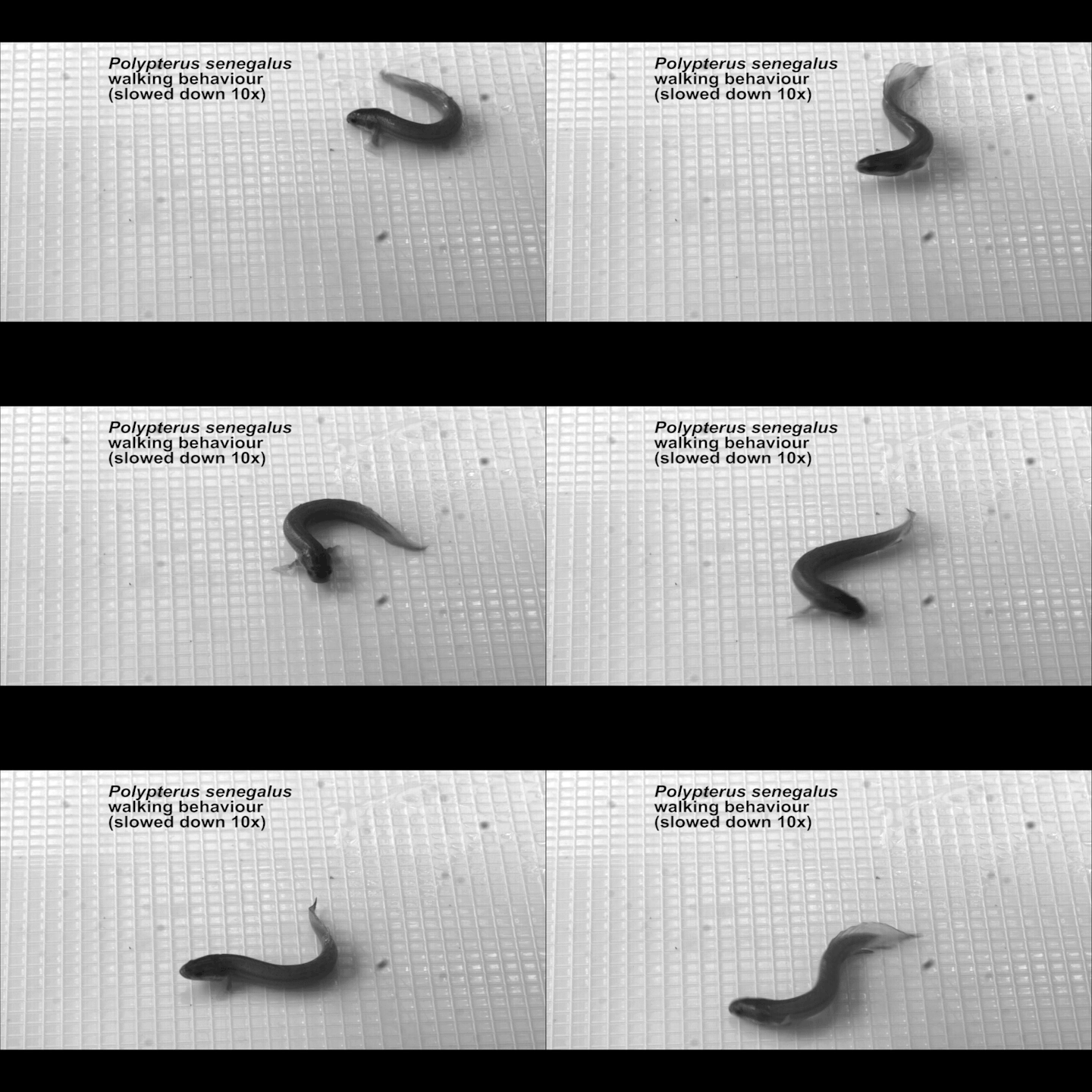
This is built upon an ancient design that all vertebrates share. One where the spine is the central axis of locomotion, the spinal engine. I have a couple articles that explore this deeper but the general idea is that what we understand of as gait begins with rhythmic lateral flexion (side to side bending) of the spine.
The Spinal Engine

Vertebrates are defined by their spine, a centralized column of nerve and connective tissue encased within segmented bones. While the first vertebrates lacked bones, they still possessed a “notochord” of similar function. This not only served as a central highway of the nervous system but also as an attachment for muscles and connective tissue.
MyoFascially Sound Resistance Training

The goal of any physical training program is to enhance the function of the body. Whether this be for sport, function, or fun will come down to the individual and his or her desires. It should follow that said program should then work with the body, cooperating with its design as much as possible.
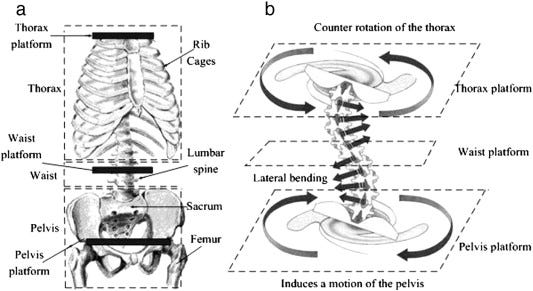
You can see this in fish, amphibians, reptiles, and just about all mammals. Humans changed this slightly by shifting up onto the hind legs. The spine was then asked to rotate more instead of laterally flexing. The lateral flexion is still present but the rotation of the spine is far more exaggerated.
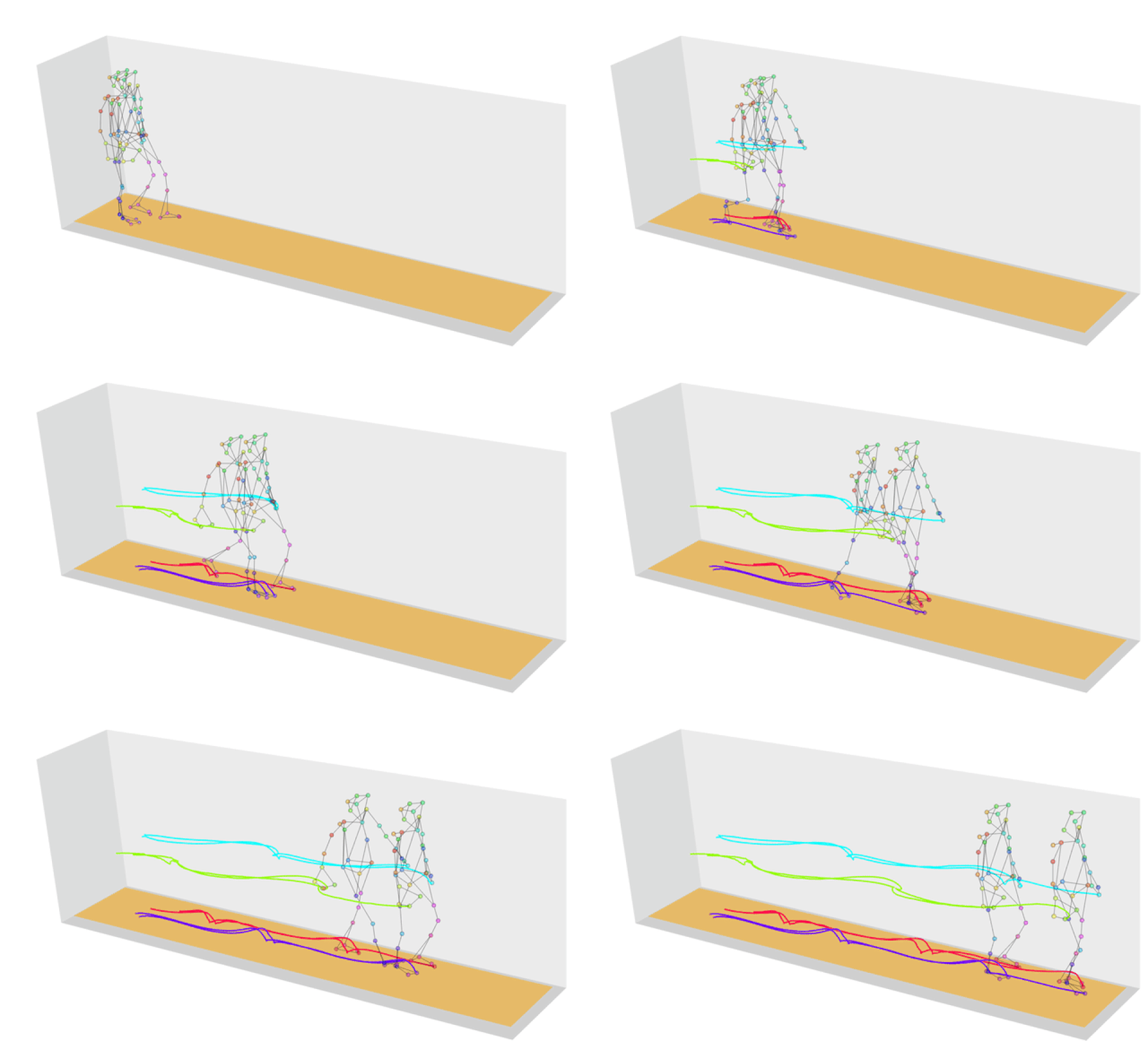
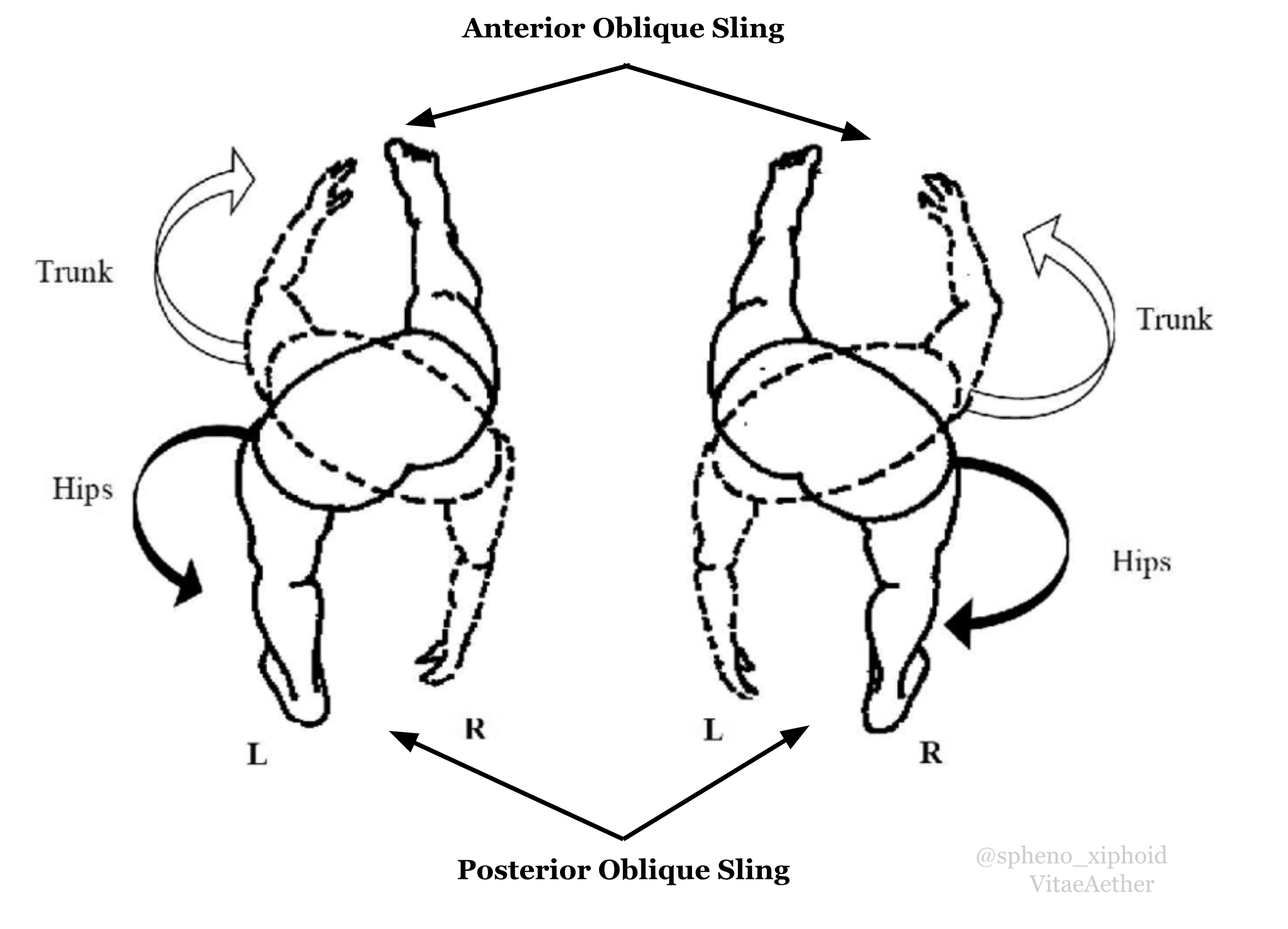
This rotation is driven by pairs of myofascial “slings” that utilize the force of muscle contractions combined with the conductive and elastic nature of fascial tissue to conserve and energy. As one sling contracts it’s counterpart rests. This gives the muscles ample opportunity to relax and pump nutrients into and waste out of themselves. The relaxed stretch of the resting sling(s) then recoils, utilizing the elasticity of the connective fascia to accelerate and add to the active muscular contractions.


The act of walking is coordinated by a complex array of sensory systems. These primarily include the inner ear (vestibular system), eyes, tongue, jaw, and a set of small muscles on the back of the skull known as the suboccipitals. Since there are quite a few moving parts that must in rhythm be it’s easy to see why coordination and communication are so important.
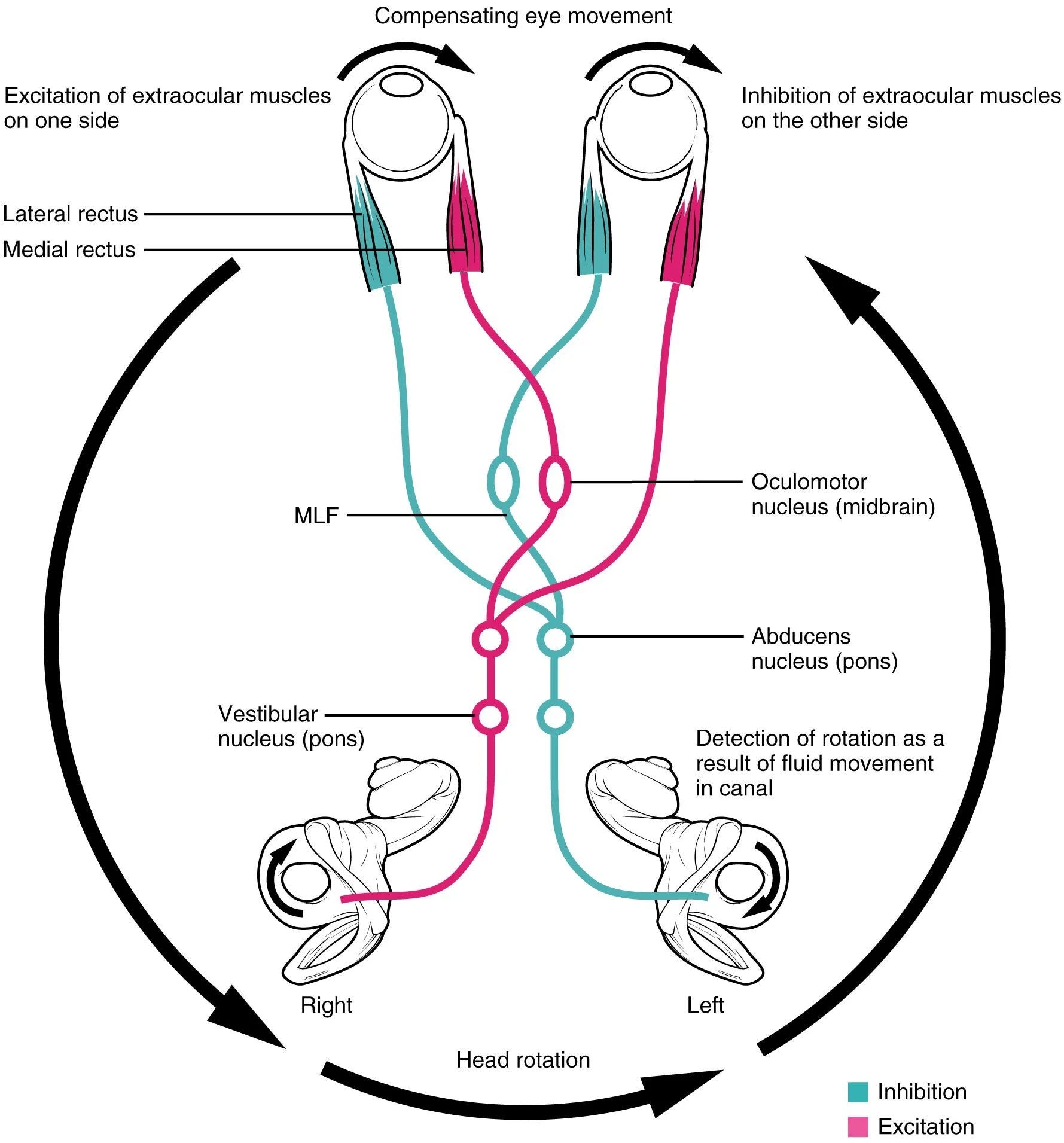
How the Eyes Shape Posture

Land-dwelling vertebrates are tasked with simultaneously propelling themselves while supporting against the constant force of gravity. This only became more of a challenge when humans started walking primarily on two legs --combined with the further growth of the cranium. At any given point in time, whether still or in motion, the spine and skull must w…
At the same time, walking is a tremendous stimulus for these systems which may otherwise be neglected in modern —sedentary— humans. A lack of walking entails a lack of stimulation for the sensory systems that enable walking. This bleeds over to existence in general as these systems help to keep the organism upright and balanced at all times.
Benefits
Why should walking be considered a therapeutic tool? That’s a good question with many answers. The reality is that walking itself should be thought of as a regulatory movement not too dissimilar from breathing. Your organism needs walking like it needs breathing or sleeping. The quality of your life is then proportional to how well and how much you walk.
If you think of life and health on a spectrum, when you are feeling your best you are probably strutting with confidence, effortlessly stepping towards whatever it is you’re doing. When you are at your worst, walking becomes extremely difficult, sometimes impossible. So while walking can be used as a general indicator of health it also acts as a means to reinforce it.
There is no bodily system that doesn’t benefit from walking in some way. From your brain to your colon, all of your organism does better after a walk. I’ll go into some of the mechanisms as to why this is the case. However what should be understood is that there are few things that walking would not be good for.
One other way to think of it, is that a lack of walking is similar to an absence of a nutrient. Yes you can survive without some nutrients for a while but your organism will have to adapt or cope in some way. These won’t always look pretty or feel good but you will still most likely survive. Walking is similar to this as without enough walking you can certainly survive but your physiology will be strained.
However you want to think about walking, whether it be as a therapy, a nutrient, or just something enjoyable, doesn’t really matter. Whatever helps you open your mind to its benefits and compels you to do so.
Fluid Mobilization
The health of your organism is related to how easily the numerous types of bodily fluids can flow. Blood, lymph, cerebrospinal fluid, as well as the interstitial fluid within tissue all require movement. This is what helps to deliver nutrients, remove waste, and maintain the necessary structure and order of life.
Walking is quite simply the most effective means to stimulate all of these things at once, pumping blood, lymph, cerebrospinal fluid, and more through the body. Yes, any form of movement does this to varying degrees, even breathing. However, walking does so more completely and effortlessly than just about anything else. More importantly, walking is accessible for most people.
Mobilizing fluids comes down to being able to change pressure gradients within the body. The heart and respiration achieve this via rhythmic muscle contractions (heart, diaphragm+) that pump fluids —blood in the case of the heart— through the body. A similar phenomenon occurs with the contraction of just about any skeletal muscle, which presses onto nearby blood/lymphatic vessels, causing blood/lymph to be pushed through them.
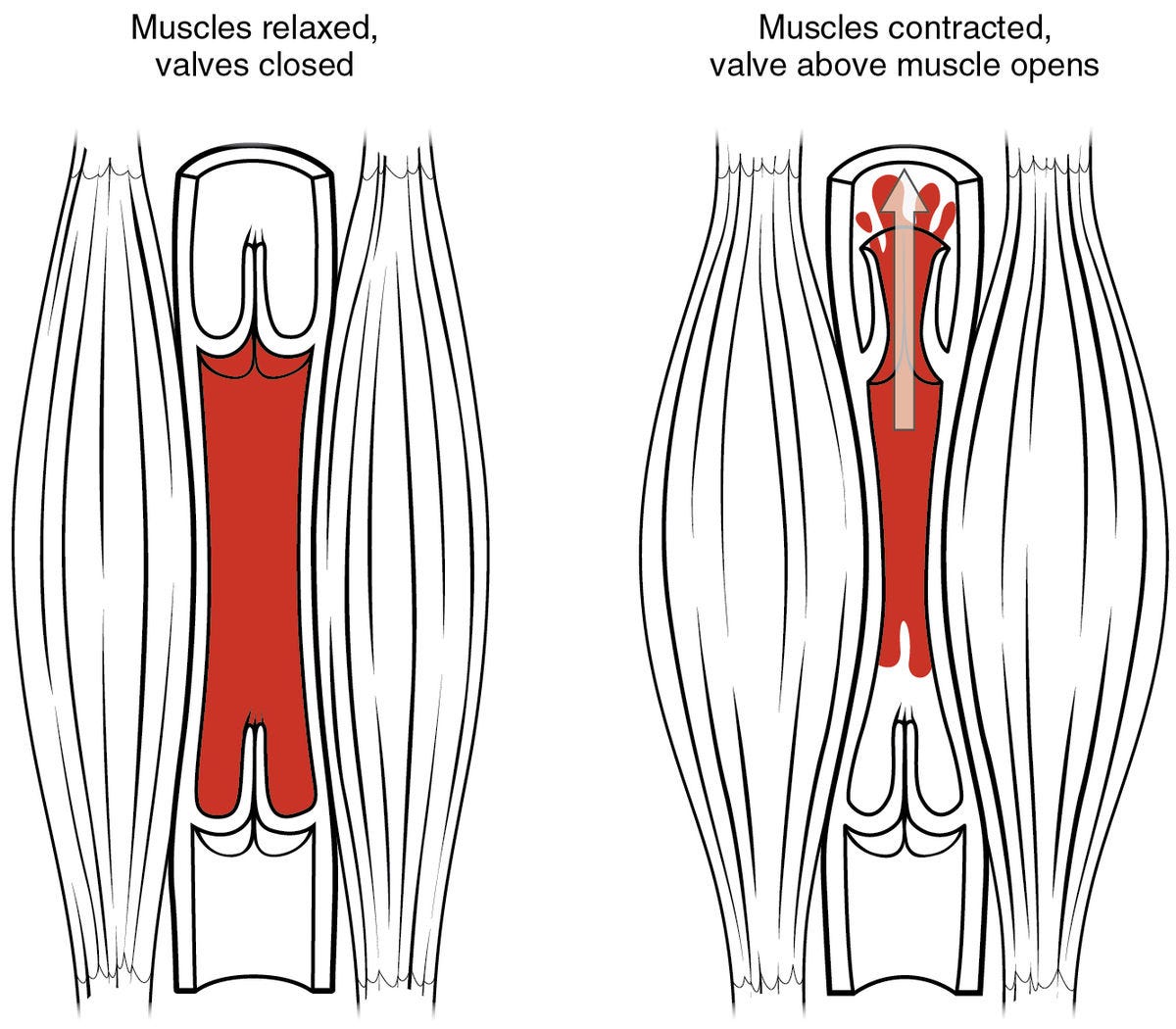
Given the pattern of movement used in walking, these muscle contractions are done throughout the body in oscillating pairs. The muscles involved are each given a chance to contract and relax cyclically, supporting the pumping of blood and lymph throughout the body. This is especially important for lymph, which has no pump, as well as the network of microscopic capillaries that feed tissue. Muscles, as well as other organs in the body, benefit greatly from the improved flow of bodily fluids.
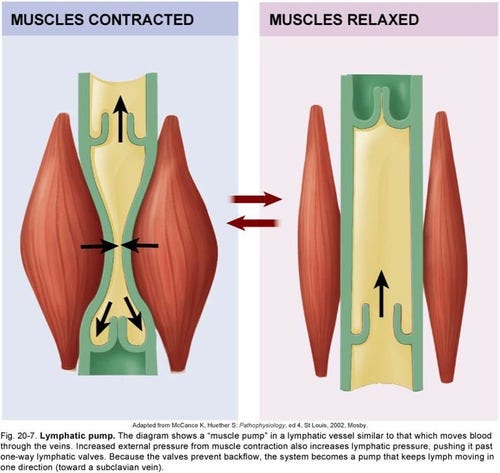
The motion of the spine during walking not only promotes symmetrical muscle through the muscles of the body but also functions as a way to pump CSF through the brain and spinal cord. Although the “heart” of CSF is via craniosacral rhythm —the rhythmic motion of the cranium and sacrum during breathing— movement of the spine itself is a welcome and often necessary addition to the process. The wiggling motion of the dural tube ensures that CSF is spread out evenly along the length of the central nervous system.


Other tissues that benefit from the movement of walking are the many joints in the body. Most joints are relatively avascular meaning that they do not contain many blood vessels within them. Instead, blood vessels from the outside feed into the synovial capsule filled with synovial fluid —a clear blood plasma-like liquid. Since the synovial fluid is contained within the capsule it can only be mobilized through movement of the joint itself.


This not only moves the fluid around the joint but help to bring in more nutrients and push out waste to/from the surrounding vasculature. Walking most prominently stimulates the intervertebral joints from the cyclic rotation and lateral flexion of the spine, however other joints will benefit similarly.
The movement of the spine is complemented by the swinging of the limbs, which gently pulls apart the various joints within them with the help of gravity. When your arm swings forward during gait the joints at your shoulder, elbow, wrist, and fingers ever so slightly separate. The change in pressure draws nutrients into the synovial capsule/fluid.
This happens in the lower limb as well but not quite as much due to their need to bear the load of the body. However even the hips, knees, and ankles benefit from walking in a similar manner.
Metabolic Benefits
When done at a reasonable pace, walking promotes oxidative metabolism within the mitochondria. This requires oxygen and is synergistic with many of the secondary effects from the movement discussed prior. The recruitment of the skeletal muscles is certainly the most pronounced of these but the resulting physiological improvements from many of the other happenings also contribute.
When your tissues are flush with nutrients and stressful waste is removed promptly they are permitted to thrive. Unrestricted, the tissues are free to respire in self-stimulating fashion. This secondary metabolic stimulation is one of the more long consequence of walking, occurring for hours afterward. Too few people focus on these effects as they often see walking and its potential metabolic benefits in a vacuum.
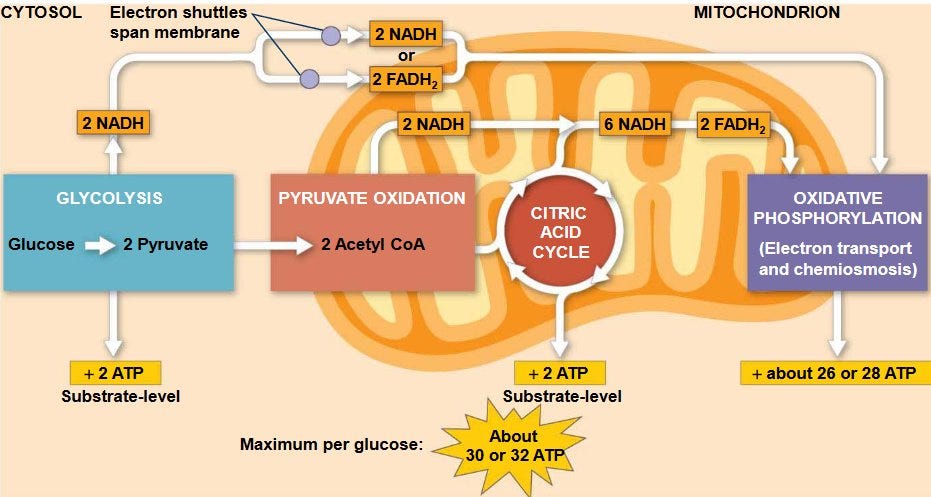
The direct metabolic effects of walking are certainly significant though as it stimulates oxidative metabolism within the mitochondria of working skeletal muscles.
While it does indeed promote healthy glucose metabolism, walking is a safe means of metabolizing fatty acids. Fatty acid oxidation is much less oxygen efficient than glucose, produces less protective CO2, and generates more (potentially stressful) reactive oxygen species. For this reason, fats are often used as a fuel source when at rest and are set aside for glucose when oxygen becomes scarcer.
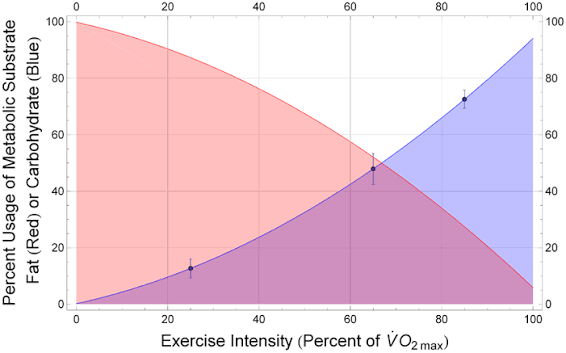
Ideally, you should be able to have somewhat of a conversation while walking. If you cannot, you are likely shifting into glycolysis (anaerobic metabolism) as oxygen availability dries up. Being “out of breath” is quite literally an indicator that you are now relying on stress metabolism and can be used as a signal to either cease the movement or dial it back.
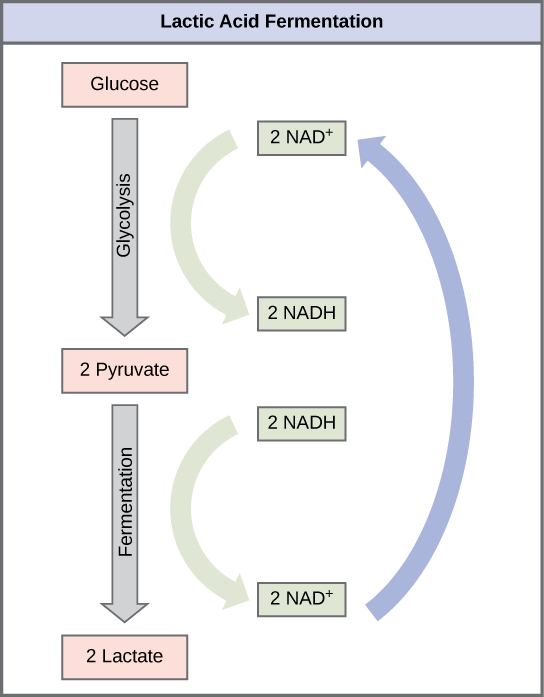
This stress metabolism is fine for short periods but ends up being counterproductive to walking if done for too long. Blood begins to thicken, lymphatic drainage pauses, the nervous system shifts towards the sympathetic, digestion halts, and more. Yes you may end up burning more calories over the course of the session, but notably impair your metabolic rate otherwise.
Worse yet, these calories that you burn are often catabolized proteins from your tissue or recycled lactate, rather than the adipose tissue that you likely desire. Over time this continually reliance on stress metabolism drives physiological adaptations that includes suppressing thyroid and gonadal function as well as catabolizing vital tissue. This sort of exercise is best kept short and relatively infrequent, not necessarily something that you’d want out of walking.
Piezoelectricity
Another interesting metabolic angle for walking is the reality of piezoelectricity —an electric charge from mechanical stress. The contraction of muscles and the gliding/compression of connective tissue generates energy through the piezoelectric properties of collagen. In a sense, movement such as walking charges you. This charge is relevant local to the tissues it is produced in, helping to signal adaptations while also possibly acting to restore cellular polarity in some circumstances.

Combined the converted energy is used by cells and tissue as needed. This could be adaptative in the case of injuries or dysfunction, helping to remodel damaged tissue. For healthy tissue this is likely regulatory, helping to maintain itself and prevent atrophy or decay.
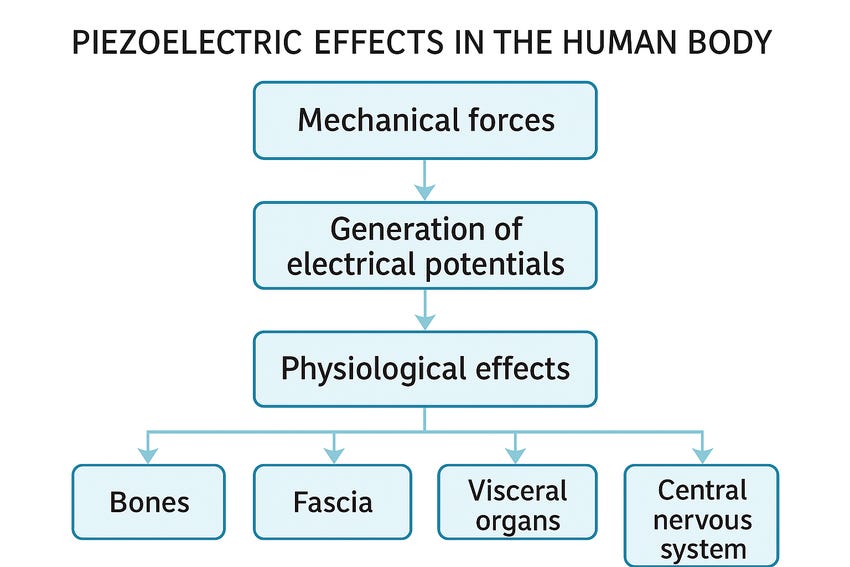
Considering walking involves movement of the entire body in a symmetric and synchronized fashion, the “local” benefits of piezoelectric collagen occurs across nearly all the body. So while the charge generated from movement is technically localized it ends up being present just about everywhere. This is significant because it means that the process of walking could then affect large swathes of the body in this manner alone.
Now how much does this affect the organism’s metabolism as a whole? That is unknown. However we should assume that if this phenomenon exists as an inherent property of collagenous connective tissue in living organisms then it likely has a meaningful role. Being able to convert some of the energy from locomotion into something else, reduces waste and makes the organism more efficient overall.
Neurological Benefits
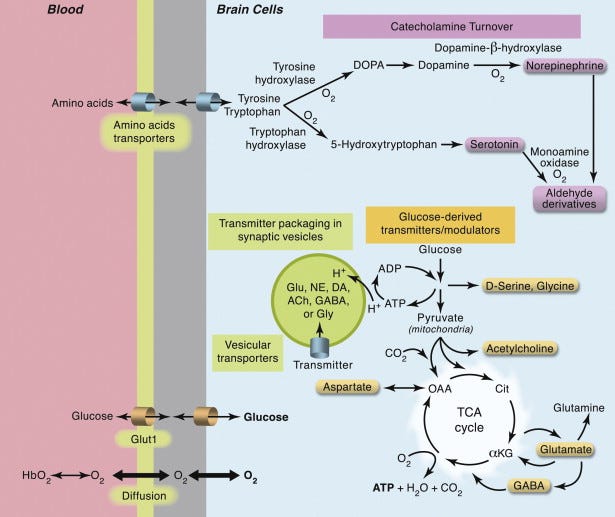
There are quite a few neurological benefits from walking, many of which are the byproduct of improved metabolism and fluid mobilization. Given that nerve tissue is incredibly energy intensive and sensitive to stress these are quite necessary for their existence. Anything that increases energy output and decreases stress will benefit the nervous system in some capacity.
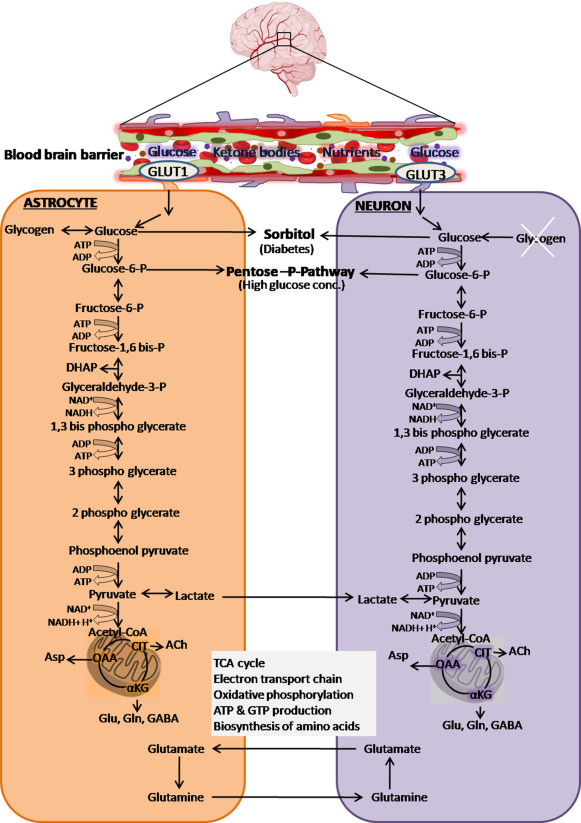
Improved blood flow is the first, as walking combined with breathing will inevitably increase the volume of blood that makes its way through the brain. It cannot be understated that the brain and the countless neurons contained within it are incredibly sensitive to reductions in nutrient supply and waste removal. Uninhibited blood flow is a foundational piece to the brain’s function.
As mentioned prior, walking is one of the most powerful stimulants to the movement of cerebrospinal fluid, which bathes the central nervous system in a nutrient rich medium. Since CSF doesn’t necessarily possess a heart-equivalent and exists deep to the surface, away from most skeletal muscles, movement of the spine itself is critical to its mobilization. The spiraling motion of the spine accomplishes this in a symmetric manner, ensuring CSF is moved through the central nervous system.
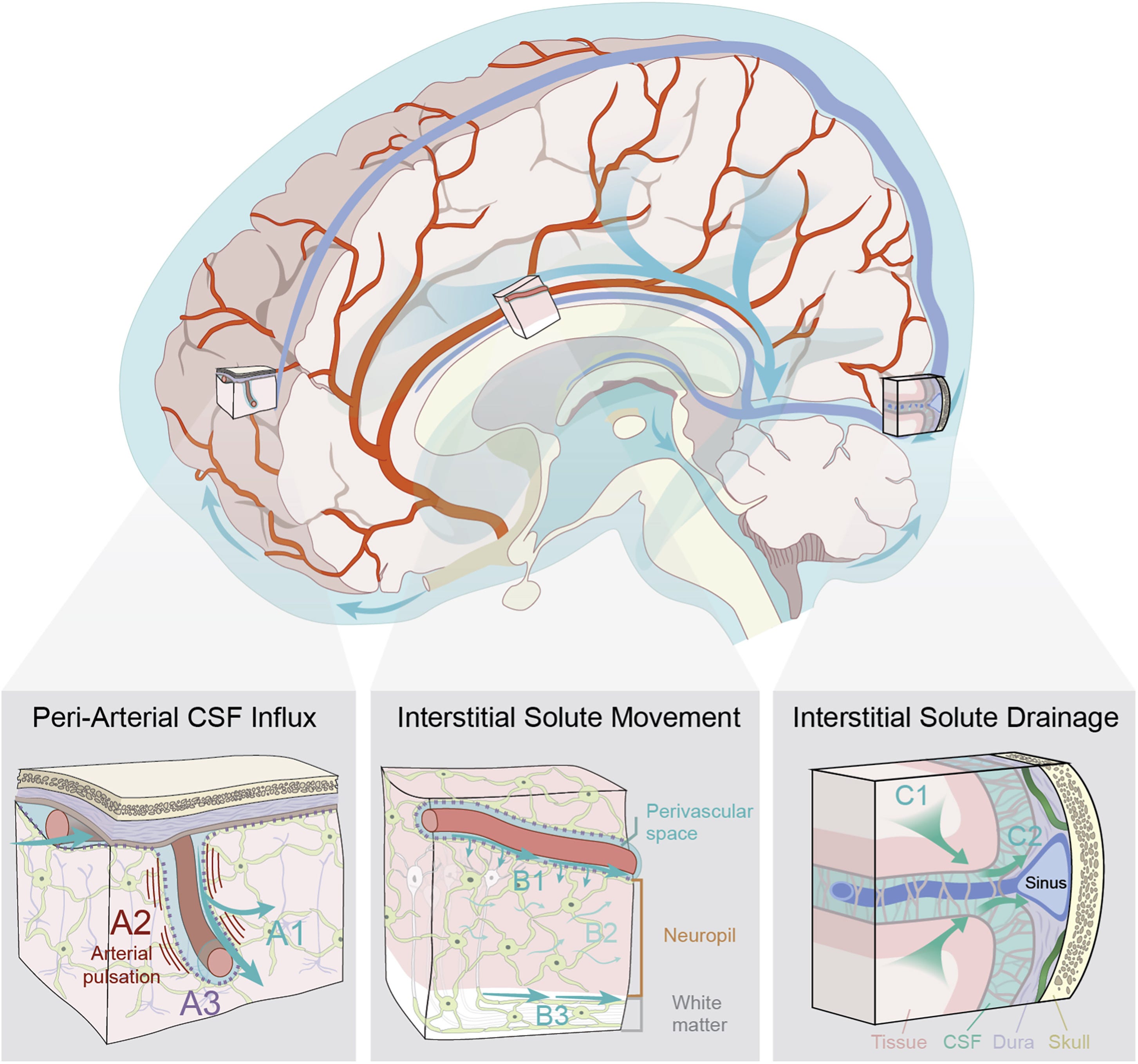
This essentially lets the brain and spinal cord “breathe” as without adequate CSF flow they suffocate. In the brain, CSF and lymphatic pathways are intertwined with what’s known as the glymphatic system. This is what allows the brain to remove potentially harmful substances —mostly in the form of metabolic waste products— processing through the rest of the lymphatic system.
Nerve tissue works quite well when you remove things that are actively inhibiting it, whether it be a lack of nutrients and/or an excess of stressors. Although these processes are ongoing regardless of movement, walking is a way to supercharge these nutrient delivery and waste removal mechanisms in a safe manner. Better blood, lymph, and CSF flow to the brain is a basic need for its function.
Neural Stimulation
Any and all movement requires a symphony of neuronal actions in the brain and peripheral nervous system. The symmetric, rhythmic motion of walking stimulates each side of the brain evenly as the motor divisions of the brain on each side must be active during the process.
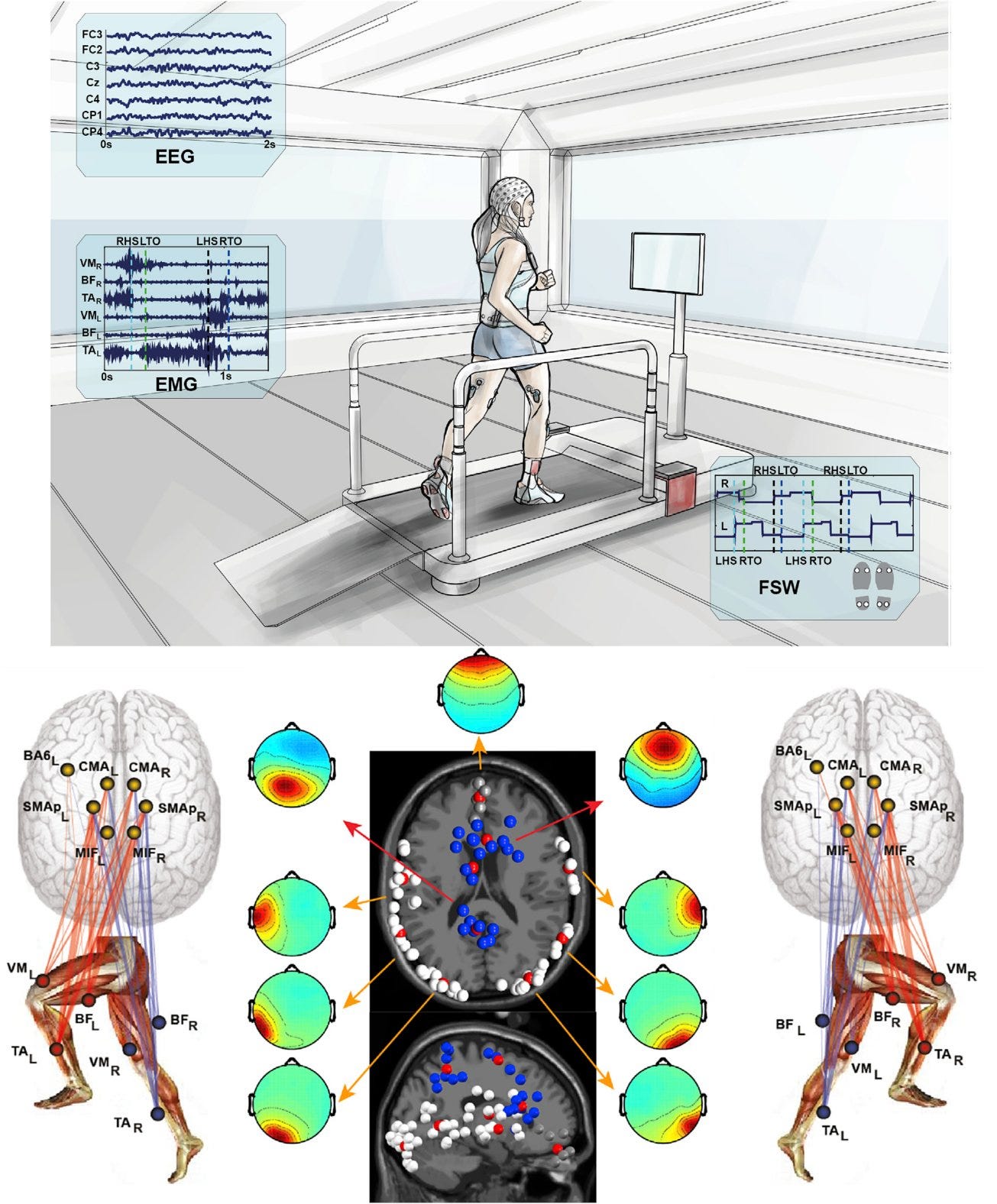
This symmetric stimulus can help promote coherence between the two hemispheres, allowing for improved processing and intercommunication. Coordinated hemispheres of the brain leads to a more coherent organism as a whole. Lateralization helps us humans to specialize and compartmentalize various abilities but the whole of the organism must be kept in mind.
Mastering Your Brain(waves)

Your nervous system is composed of countless neurons that send and receive information through the body. In order to simplify these mind-boggling processes, these neurons harmonize with one another in the form of a unified electrical impulse, a “brain wave”.
When these different parts of the brain, though dedicated to separate tasks, can communicate better with one another, the result is a more harmonious interpretation of the inside and outside world. Similarly harmonious adaptations to said stimuli will follow.
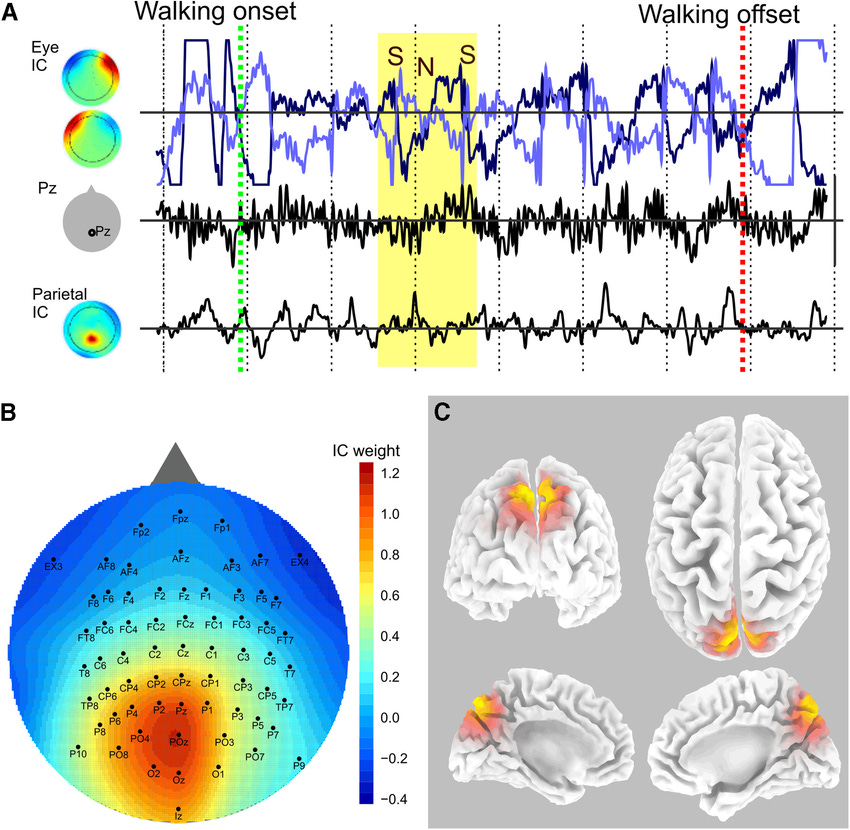
Perhaps this is one reason why walks are often called upon when trying to process difficult thoughts or emotions. Not only are you quite literally “clearing your mind” of waste and bringing in nutrition but you are also allowing different parts of your mind to communicate with one another. New perspectives, sudden realizations, and spontaneous ideas are not uncommon when going for a walk.
Autonomic Benefits
Walking also serves as a means to regulate your autonomic nervous system. While the rest of your life may have a stressed and hurried feel to it, a walk is a time that you can operate at your own, ideally somewhat relaxed, pace. The worries of the world pause just for a short period of time as you take a stroll and even if your world is seemingly collapsing around you, the time you spend walking is one where the stressors don’t matter quite as much.

The naturally relaxing properties of walking allow you to shift out of a sympathetic (stressed) state. Your breathing changes, digestion resumes, your thyroid kicks into gear, and life goes on about itself as designed. This too synergizes with the myriad of other benefits of walking that have already been highlighted.
A walk can only really do this when it done slow enough as trying to push too hard will inevitably recruit the required sympathetic pathways. This is intertwined with the metabolic demands of the movement. This isn’t to say that stressful exercise is bad, but that it needs to be contained to short periods with adequate recovery. If you want to maximize the benefits of walking it’s best to keep the intensity of your walks somewhat muted.
Gastrointestinal Benefits
One of the more pronounced effects of steadying the autonomic nervous system is the permission of digestive activities. While stress may temporarily inhibit digestion, being in a relatively relaxed state —like that from from walking— can help resume its many duties. This is why it’s important not to push yourself too hard or too far on your walk as it can end up having the opposite effect on the gut.

The benefits to the gut aren’t just limited to autonomic balancing as the act of walking serves as a means to physically mobilize the gut’s contents. Remember that the GI tract is a winding muscular tube that propels its contents through a series of rhythmic contractions known as peristalsis. Although we don’t think about how the food we put into our mouth eventually exits from the other end, this process does take energy and isn’t absolute.
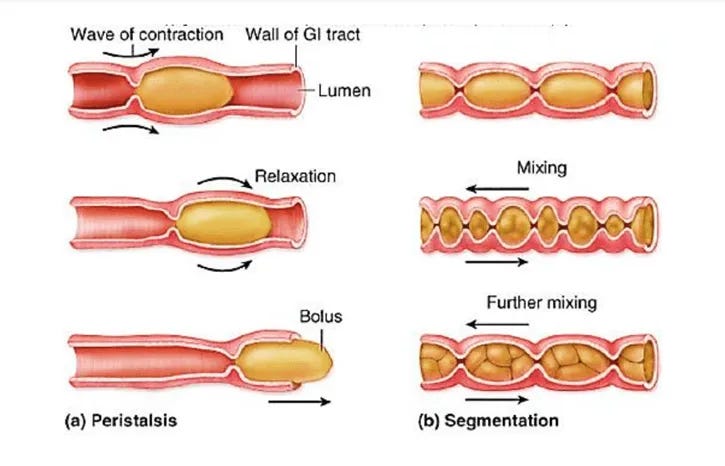
Movement from the whole body, especially that which is generated through walking, essentially shakes the gut and assists peristalsis in mobilizing the contents. This also helps churn and mix the contents of the stomach and intestines, allowing for more complete digestion overall. This is another interesting point because digestion as a whole isn’t black or white. The more completely you can digest your food the more nutrients you will absorb and the less will be fermented by unwanted microbes.

Part of this physical assistance is just a general consequence of locomotion and movement of the entire body. However muscles involved in gait —mainly the iliopsoas— combine with the diaphragm to massage and mobilize the GI tract directly as well. The diaphragm pushes down and relaxes upward as the psoas muscles contract one at a time. This is significant as they possess direct fascial connections to the intestines.
Fascial Benefits
Yet another tissue that benefits from the act of walking is fascia. Fascia itself is present just about everywhere acting as a physical wrapping while also performing numerous sensory and metabolic services for the organism. There are many ways to care for your fascia, yet walking is one of the more comprehensive ways to do so.
Living Fascia

Fascia is often thought of as simply being an inert wrapping for muscles/organs, perhaps because dissection and study rarely happens in living organisms. In reality, it is an essential energetic, sensory, and nutrient-delivery organ. This includes mechanical proprioception, autonomic innervation, electron/biophoton conduction, and stem cell propagation.…
The different layers of fascia, encasing organs and skeletal muscles, must glide atop one another. Friction between these tissues is energetically wasteful while also potentially becoming painful and leading to further dysfunction in some cases. Although underlying metabolic issues may lead to this “sticking” or drying of the fascia, a deficiency of quality movement (such as walking) is certainly one of the driving factors for this.
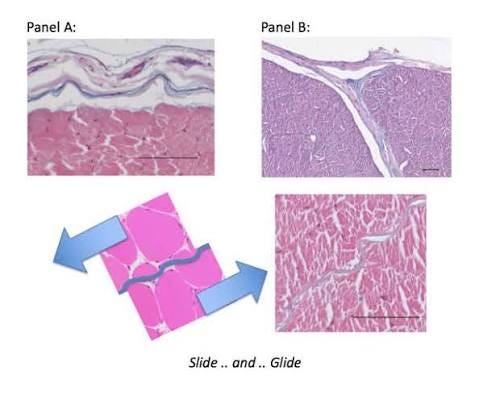
Walking presents the perfect opportunity for fascial tissue to regain its ability to glide. This is in part due to the metabolically stimulating nature of walking along with the mobilization of fluids within the body. One of these fluids is the hyaluronic acid meant to act as lubrication for the different layers of fascia. Movements like walking that incorporate the entire organism help to stimulate the production and spread of hyaluronic acid, reducing friction between tissue layers.
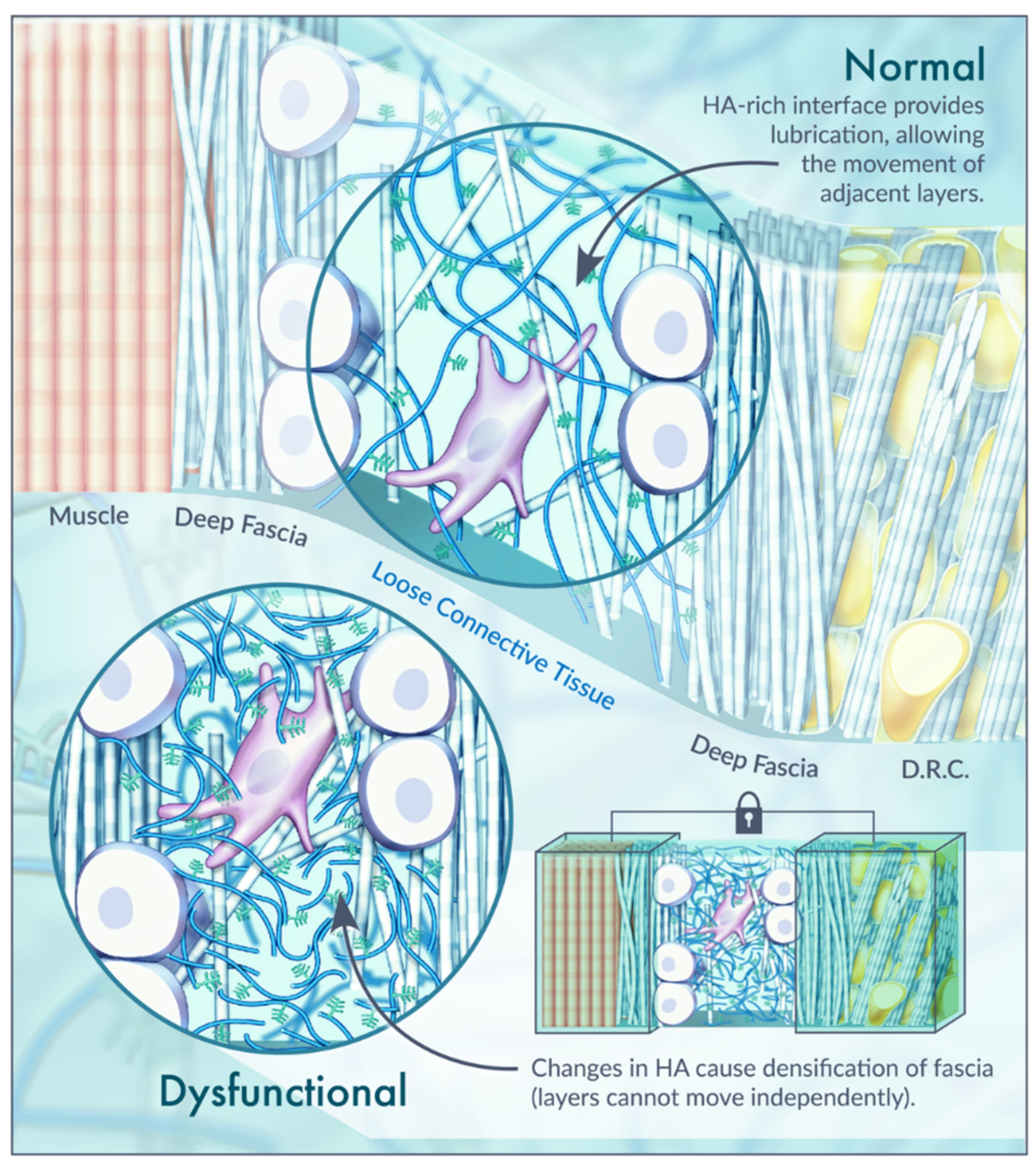
Another necessary trait of fascia is elasticity. The ability to stretch and recoil effectively is what allows energy generated by the skeletal muscles to be conserved and even amplified in some instances. The act of walking requires this in order to be so energy efficient. At the same time walking trains and reinforces the tissues to become elastic and flexible, rather than stiff.
Yes, there are underlying metabolic components to these adaptations as fibrosis of tissue is indeed a consequence of stress and/or energy deficiency. However walking provides a multifaceted stimulus to prevent and even help reverse this. If you don’t walk enough, tissues that would otherwise need to be elastic can afford to become stiff since the stimulus is absent. Combined with stress or energy deficiency and the body will cut costs metabolically by stiffening and hardening some parts of the fascia.
Postural Benefits
So if our bodies are designed to walk and have adapted themselves quite a bit to walking then it follows that walking should be a positive for maintaining and/or fixing issues with said design. If you have any sort of physical pain, tightness, or other dysfunctional movement then there is a good chance that it bleeds over to your gait as well. It doesn’t matter if this dysfunction exists somewhere like your jaw or your hamstrings, either will make walking more challenging.
At the same time, just about any of these dysfunctions would benefit from some amount of walking. When you walk several things happen: your metabolism hums, digestion resumes, fluids are mobilized, fascia stretches/glides, the nervous system is stimulated, and much more. It should be understood that when we experience seemingly physical problems like muscle tightness, joint pain, and awkward or stiff movement we are not strictly dealing with a purely physical problem.
Many of these issues are rooted in dysfunctional metabolic and/or neurological phenomena, manifesting as tight muscles, stiff fascia, and a lack of coordination. I have some more articles that address this issue more completely if you’d like to read more:


Walking provides a complete and balanced stimulus that addresses many of the reasons why one may experience seemingly physical dysfunction. Walking alone probably won’t solve these problems but without walking, the other exercises, modalities, and therapies you try will be limited in their effectiveness.
Walking allows these things to synergize with one another all at the same time. Muscles and nerve pathways are stimulated, proprioception is tested in motion, all while metabolism and body fluids are uninhibited. This means that any changes that need to occur are being provided with both the stimuli and the energy to do so.
Given the reality of the spinal engine, walking spans the entire body, affecting structures like the tongue, jaw, pelvic floor and everything in between. Even the cranial bones —due to their relationship with the jaw and spine— also are stimulated as they must be somewhat motile enough to transfer energy with each step. This isn’t to say that walking will solve your TMD but that it can certainly help.
Body Composition Benefits
When you put all of these other benefits together you are undoubtedly affecting the function of your organism (positively) from several different angles: improved metabolic function, reduced stress, better digestion, a shifted perspective on life, and more. If the overall function of your organism improves then your outward appearance has no choice but to reflect this.
For this reason, walking is a tremendous aid to anyone looking to improve their body composition, whatever that may look like. Trying to trim some fat while maintaining muscle? Walk. Want to put on some muscle while minimizing fat gain? Lift weights, and then walk. Want to keep your physique exactly as it is now? Walk (and probably lift weights as well). There really isn’t any goal that you can have in regards to your body composition where walking doesn’t come into play.
Unfortunately many people are stuck in a fixed calories-in: calories-out mindset where they see the primary goal of something like walking to increase the calories-out variable. This runs into problems because the act of walking itself is meant to be energetically efficient and, as explained earlier, was one of the advantages early man possessed in his evolution. If walking weren’t efficient we wouldn’t be doing it.
Because of this, walking itself does not consume a tremendous amount of energy and should not be looked at strictly as a way to “burn calories”. Instead you should look at walking as a means to streamline and optimize your organism so that it can burn more calories by simply existing. The culmination of the positive effects of walking results in increasing the basal metabolic rate by both supporting oxidative metabolism and removing potential inhibitors to oxidative metabolism.
This also creates a subtle shift mentally to where walking doesn’t become a death march for the purpose of suffering and is instead a beneficial and enjoyable act. Walking should feel good and should be something you look forward to, not something you dread and end up doing because it’s “supposed” to be good for you.
If you make yourself dread going on walks and feel bad while doing so you end up suppressing many of its inherent benefits. As touched on earlier, by treating walking as simply a means to burn calories you can end up pushing yourself harder and further than need be. This takes you from a relaxed state into a unnecessarily stressed one.
For those stuck in a world of self-flagellatory penance this might be confusing as you’ve been conditioned to believe that things that are good for you must feel bad for you. This devilish warping of reality needs to be done away with in general but especially when it comes to something like walking. No this doesn’t mean that you shouldn’t be somewhat tired after a long walk, but that outright fatigue is not necessarily the goal, but a consequence.
After a walk you should feel (somewhat) energized, clear headed, and overall better than you did before. Yes you may be a little tired but you shouldn’t be so exhausted that it affects the rest of your day. If you are then something went wrong: either you walk too fast, for too long, or weren’t sufficiently fueled beforehand.
By treating walking this way you can unlock the myriad of benefits that it provides. It is a time to nourish and worship your organism, not to punish yourself for your self imposed sins.
How?
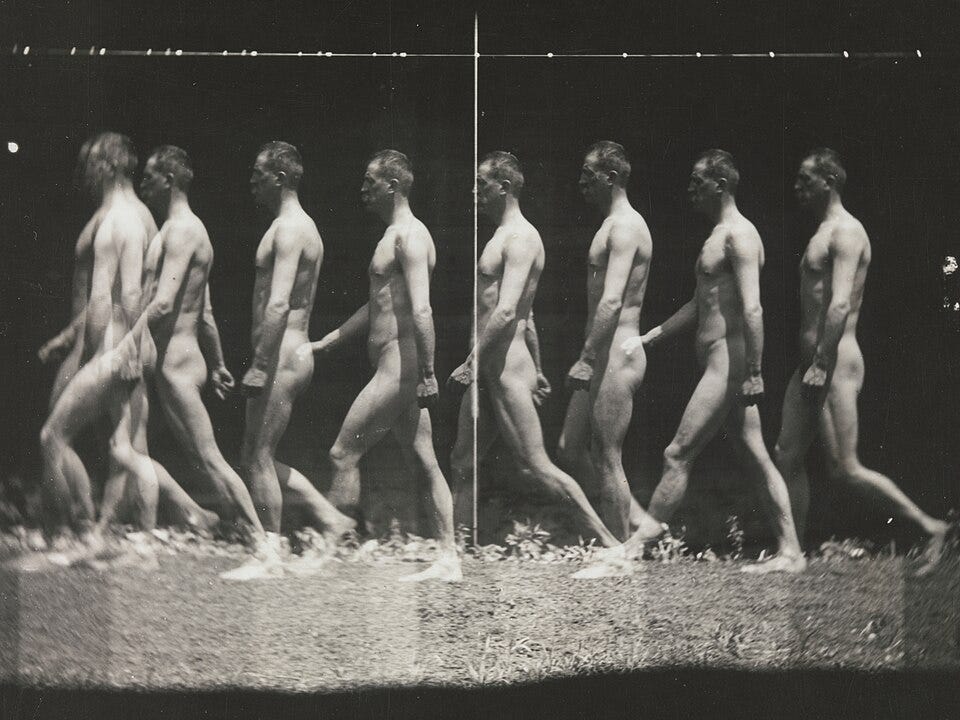
Ok you probably don’t need to be told how to walk. Walking is innate and should be thought about very little. That said there are some concepts that can be kept in mind to ensure you are walking as efficiently and beneficially as possible. Most importantly you should be aware of the spinal engine and the myofascial slings that drive the movement. If you’d like a simpler visual then imagine two sets of cyclically oscillating helices that run the length of your spine, twisting and turning with each step.


As your spine twists and bends from one side to another, your eyes track side to side, and your jaw/tongue rock back and forth. As you walk you can pay attention to where you may be resisting this movement, tensing and bracing as a protective response. Try to release said tension, wherever it may be, as your spine oscillates. For some this could be at the base of the skull in the upper cervical region for other this could be in the pelvic area.
With that said, don’t confuse yourself thinking too much about it, really this should be 100% natural. These small changes in focus are more for individuals who are dealing with problems. Another way to think about this is trying to walk as effortlessly as possible. While searching for the most efficient means of walking you’re likely to stumble upon the best way to walk.
Each step should feel like you’re gliding and if it doesn’t necessarily feel natural this may mean that you’ve become adapted to moving inefficiently. Your physical body, along with the sensory systems that coordinate it may be stuck in this state by habit, repetition, and possibly stress. Don’t try to force yourself out of this state as it will only cause you to tighten and resist more.
Also please don’t add excess weight to your body thinking it’s going to increase the returns from walking. If you’re going hiking and are carrying supplies that’s one thing, but by putting on a 20 pound weight vest to walk around the asphalt/concrete in your neighborhood you aren’t really doing yourself any favors. If your gait is perfect and you’re relatively underweight this might not be that bad but adding weight to your body generally skews movement patterns unfavorably.
Again this goes back to the idea of trying to use walking as a means to “burn calories” when in reality it should be used therapeutically. Adding misery to your walk takes away from the therapy while adding in a nominal amount of energy wasted. This type of exercise has its place but most people would be better off walking without any added resistance.
How Often?
You should ideally walk as often as your life allows it. Some may have obligations that put a cap on how much you can walk and that’s fine. You don’t necessarily need to spend most of your day walking but you should be able to spend at least some of your day doing so. If your job or lifestyle requires plenty of walking you may not even need to dedicate time to it, as you are already doing so.
Frequency, at least on a weekly scale, is going to be the most important factor here. Walking 1 mile every day is going to be better than walking 7 miles once a week. This would be like trying to sleep for 2 days straight and then staying awake 5 days in a row. Walking is a behavior that, like sleep, should be done on a daily basis. However the comparison ends here as even if you only have time to go for a walk once or twice a week you should still do so.
When?
When should you walk? Whenever you want to. Seriously this shouldn’t be something you need to “optimize”, you should go for a walk when you feel like it. This could be in the morning after some coffee and breakfast, midday to get out of the office, or in the evening before dinner. If you’re the type that needs structure then by all means go and plan a walk within your daily routine.
The when will often determine how far you’ll be able to walk, related to how much you’ve eaten and your glycogen stores. You probably won’t be able to go far after a massive dinner compared to having a relatively empty stomach late in the morning prior to lunch. You can even do separate walks, a longer one on an emptier stomach (not glycogen stores) and a shorter one after a meal. This would allow those walks to have separate focuses, one to assist digestion and the other for more complete benefits.
Where?
Where should you walk? Ideally outdoors in some (in)direct sunlight, a natural environment with trees, fresh air, away from the hazards of the developed world. This sort of the environment also presents a form of novel stimulation. The variety of flora and fauna and the uneven walkway filled with obstacles will all provide an ever-changing flow of stimuli that keeps you engaged.

This keeps the walk(s) from becoming boring and instead provides a reason why you may look forward to or enjoy doing so. Natural places also help keep you from environmental pollutants including the electromagnetic prison many are detained in. The walk then becomes a period of time when you are free from many of these stressors, able to breathe and exist a little easier.
Even if you don’t live in an area that has accessible nature on foot it can be well worth a short drive to get to one of these places in order to walk. Doing so can also allow you to add variety to your walks, finding new and interesting places to explore. This novelty is a powerful stimulus of its own.
Why?
So under what circumstances would walking be used as therapy? What conditions would benefit from walking? Just about anything. If you’re physically capable of walking then you would benefit from it. It doesn’t matter if you’re feeling a little down or are suffering from a serious disease or condition, a walk will be good for you. Obviously you need to use good judgement as to how much or how far you walk, but walk nonetheless.
Does this mean walking alone will solve your issues? Probably not. However you probably aren’t going to solve your issues without spending a meaningful amount of time walking either.
Just go for a walk.