TMD
The causes and solutions to your ailing jaw(s)

If you clicked on this article there is a good chance that at some point in your life you have dealt with a problem (or problems) with your jaw. This may have been pain, clicking, tightness, and many of the other symptoms that go along with it. This could have ranged from a mild nuisance to outright debilitating You’ve also probably scoured the internet for fixes, desperately trying for relief. Again, if you’re still reading this then prior solutions have been less than satisfactory.
In this article I will break down what you can actually do to fix your TMD for good. This isn’t going to consist purely of quick fixes or tricks to solve your problems for good, but to help you understand what may be going wrong and what needs to be done to fix it.
Ok let’s start with what temporal mandibular dysfunction is and what it entails…
The term temporal mandibular dysfunction (TMD) is a blanket term used to describe whenever something goes wrong at the temporal mandibular joint (TMJ). Though there are obvious symptoms such as pain and clicking in the joint as well as tightness of the surrounding muscles there are a number of other symptoms that go along with it. Some of these include:
Local pain
Radiating pain in the head, neck, and shoulder region
Headaches
Tinnitus, ear issues
Anxiety/restlessness
Clicking, popping, grinding of the TMJ
Limited motion at the TMJ
Tightness of the jaw, throat, and neck muscles
Vertigo, dizziness, balance issues
Facial pain/paralysis
Eustachian tube problems
Thoracic outlet syndrome (numbness/weakness of the upper limbs)
It is rare for TMD to be isolated to just physical problems, as these other symptoms can accompany it in countless combinations. TMD may not necessarily be the cause, sometimes being a reaction to a number of other stressors or problems. For this reason, TMD can be difficult to pinpoint.
What is TMD?
So quite literally TMD is any form of dysfunction of the temporomandibular joint. In translation, when the mandible does not move or otherwise behave as it should. This is true for just about any joint but the jaw is fairly unique in the body and possesses a number of different motions for several roles.
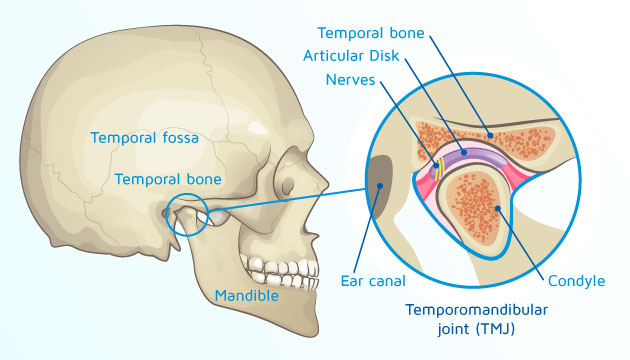
A common misconception about the temporomandibular joint is that it is just a hinge, opening and closing the jaw upon a fixed axis. I won’t harp on the common man because it does look like a hinge from the outside, but any time spent looking at basic anatomy dispels this idea instantly. There is no excuse for professionals who think and act like this is the case.
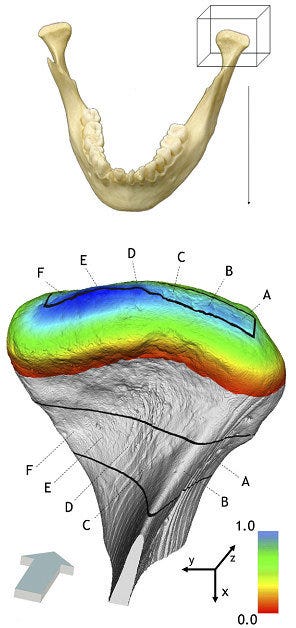
So if the TMJ isn’t a pure hinge how does it work? In reality, the TMJ can move in all three planes: opening, closing, shifting from side to side, and even tilting in either direction. If you look at the mandibular condyle —the structure that interfaces with the joint in the skull— it supports these movements with an ellipsoid shape. Since bones mold themselves to their demands, this shape gives away its true behavior.
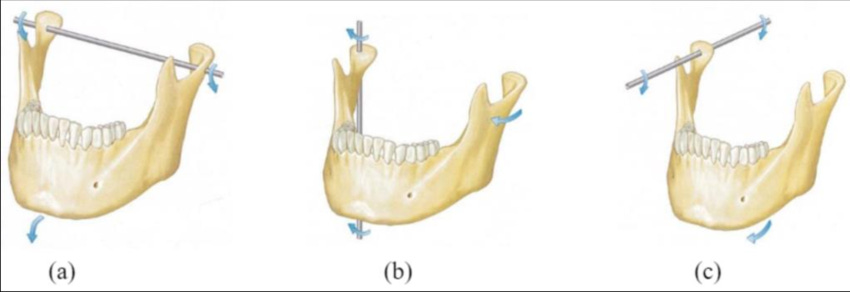
What makes things fairly more complex is the articular disk that exists within the joint. This is meant to protect the rest of the joint as the mandible goes through its movements. Ideally the mandible and articular disc are in rhythm, dancing together within the joint.
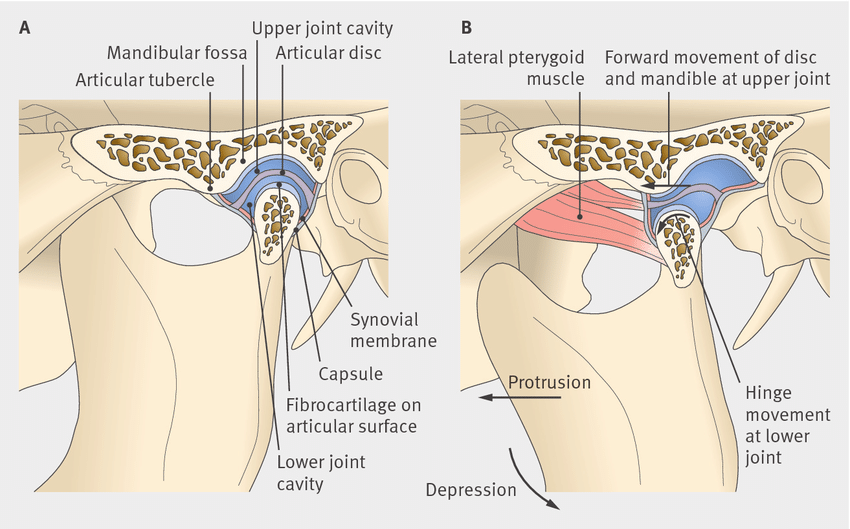
The trickiest movement is mandibular depression, opening the jaw. Here the mandible swings forward and downward simultaneously. Meanwhile the disc must keep pace with the mandible, again guiding it through the process. In TMD, this movement is often the most difficult, leading to clicking, popping, tightness, and even pain. The disc and mandible become desynchronized.
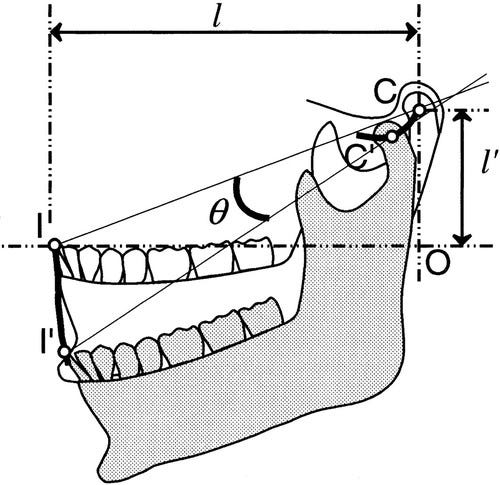
This grows ever trickier with the additions of lateral movements, such as those involved in chewing as well as general movements like walking and moving the neck. These also involve slight movements of the jaw. The mandible may end up twisted and contorted, opening and closing fine on one side but not on the other.
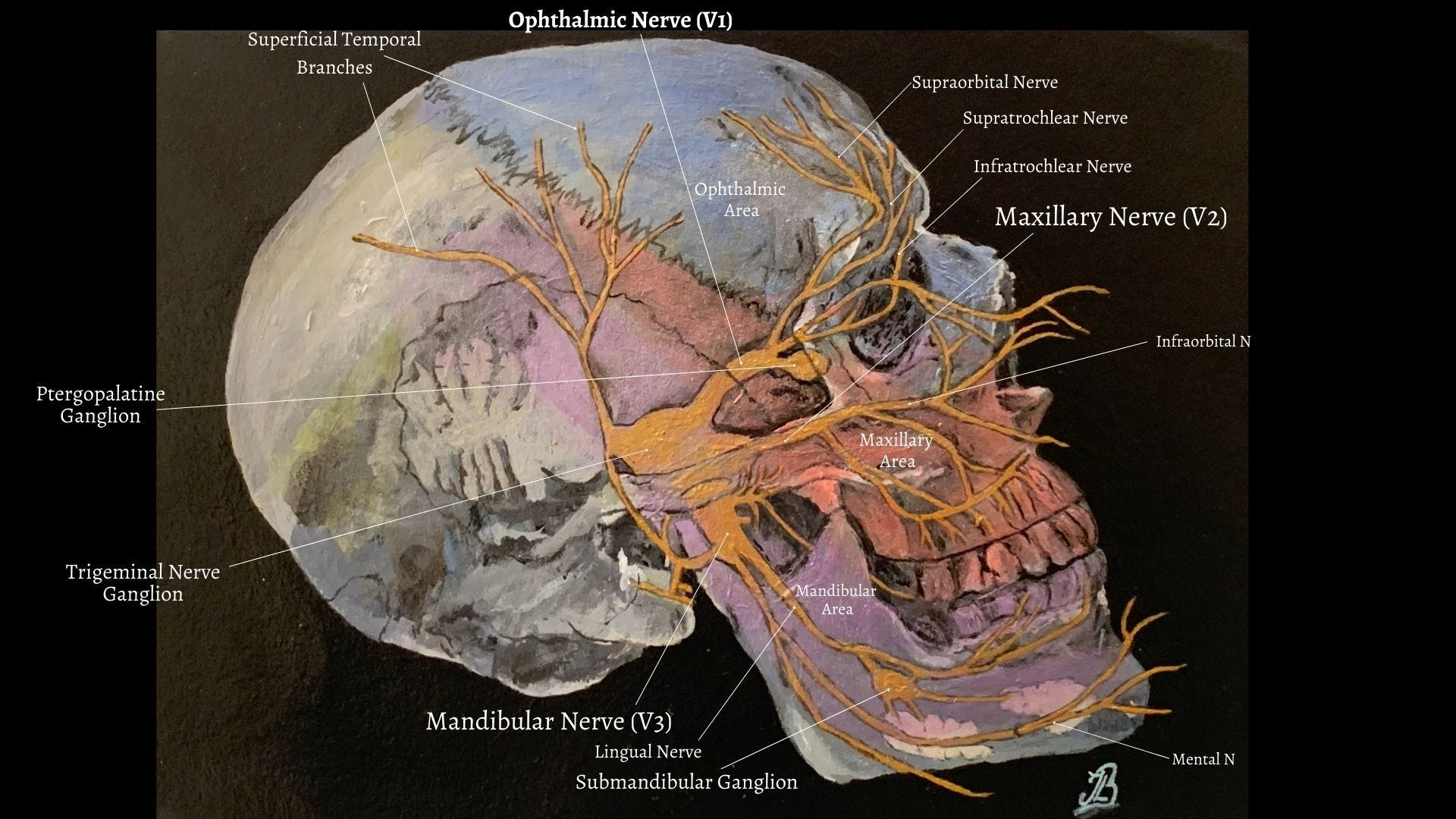
Disrupted movement, mainly excessive retraction back into the joint, can induce physical stress on the joint itself while also interfering with some of the structures located in the area. These include various nerves and blood vessels, whose irritation can lead to some of the secondary symptoms of TMD like tinnitus, vertigo, and facial pain.
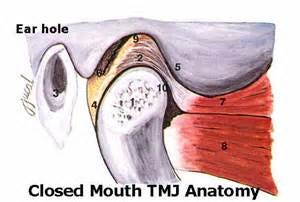
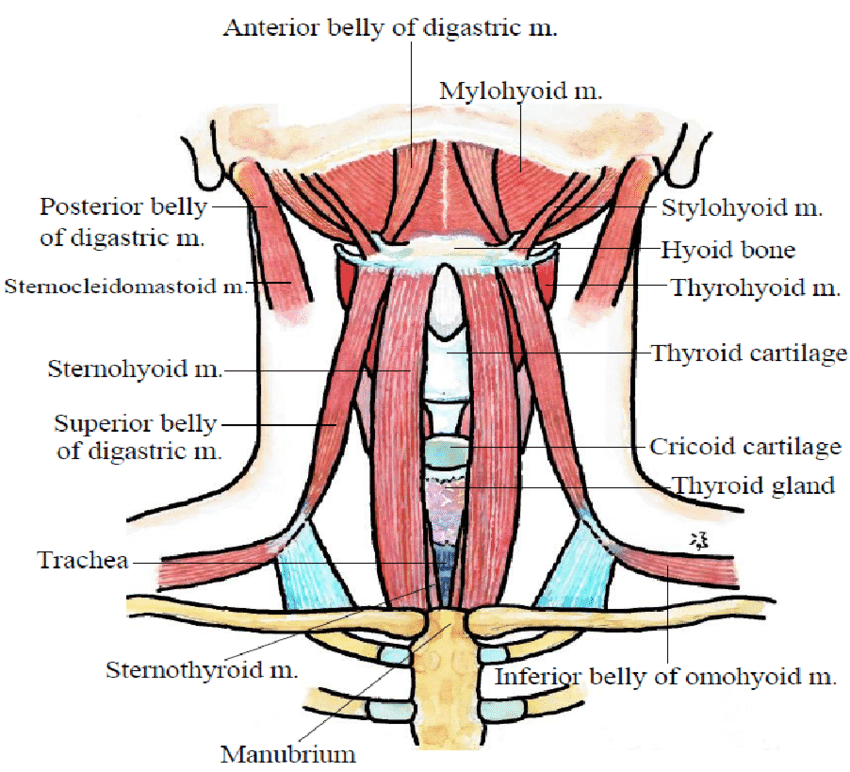
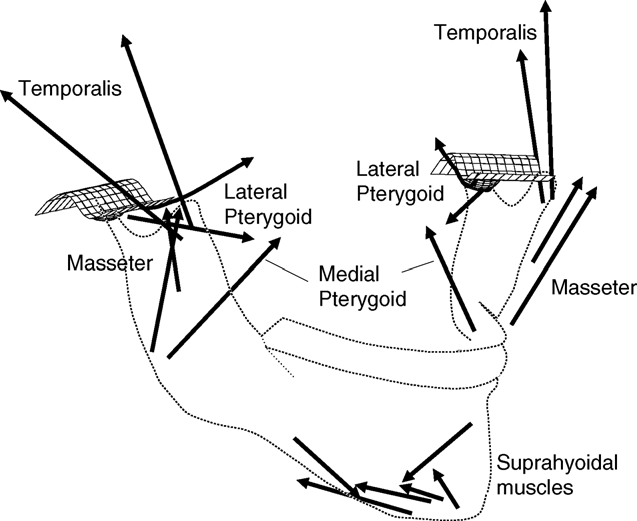
The direct cause of this is some sort of dysfunction with the muscles that attach to and move the mandible. Not just the muscles that attach to the mandible but also other muscles and fascial tissue that connects to it indirectly. The tongue, hyoid bone, and face all share connections to the mandible, meaning that they can all alter its behavior.
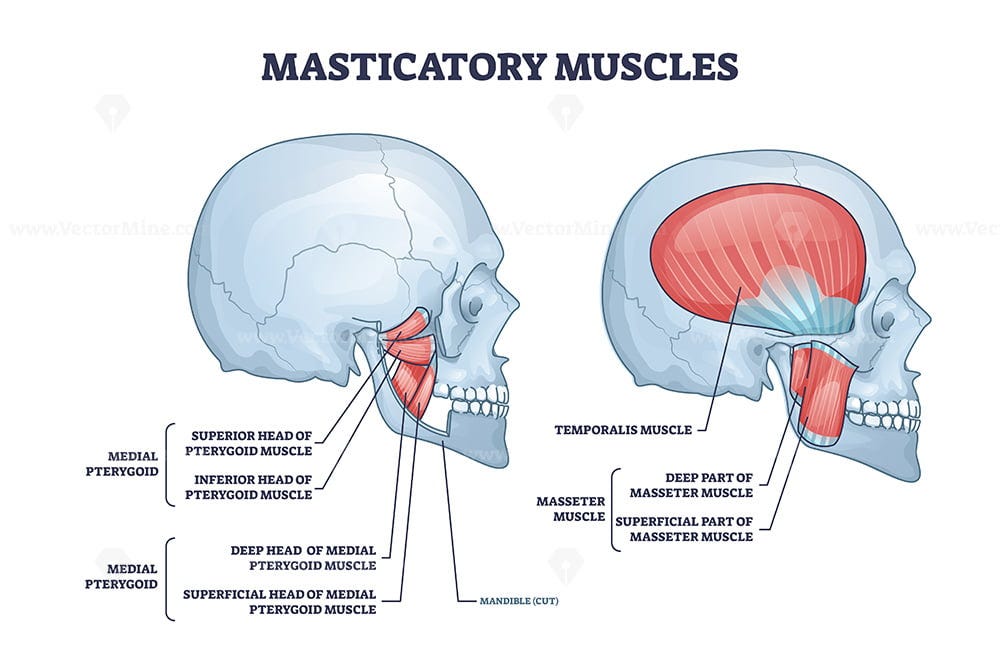
Since fascial tissue spans even larger swathes of the body these can impact the jaw when they tighten and otherwise become stiff and inflexible. Changes throughout the body can end up being felt in the jaw as the phrase “everything is connected” isn’t just a meaningless platitude but a physiological reality.