
A Guide to Light Therapies

Light therapies have quickly picked up in popularity recently as just a few years ago you would be looked at funny for bringing up the subject. Now it’s mainstream with celebrities, athletes, and even doctors promoting various light therapy products.
This was inevitable, as the benefits of light, even from an allopathic perspective, are undeniable. Just about anything and everything light has been studied for it has also been beneficial for. There really isn’t any equivalent to light as it is a fundamental requirement for nearly all life and nearly all of life’s processes.
The business opportunity of light therapies has created countless products flooding the market today. Just search on a place like Amazon for “red light therapy” and you’ll be inundated with thousands of different products of varying shapes and sizes. You’re also probably being influenced by people in the media, podcasters, influencers, may also be sponsored by various brands which claim to be the best.
In this article I will break down the different types of light therapy devices, what they can be used for, and what to look for when buying one. There are some that I will recommend, but these are not the only devices that you can choose from. The truth is that there are many companies out there making quality products for consumers. You just have to know what you need and what to look for in a given device.
The products I mention or recommend will be either ones I currently own and use frequently or ones that are well liked by others. This will not be an exhaustive list but hopefully I provide enough info to make a decision on your own.
Quick Rundown on Light Therapy Effects
Before I get into the products themselves I figured I would briefly touch on the goals and effects of various of light on your body. There is much more to it and this is a severe simplification but this gives you an idea of what is going on when you shine a light on your body.
Red and Infrared
Structures water within cells (EZ water)
Increases ATP production within mitochondria
Generates mitochondrial melatonin, a powerful antioxidant
Green, Cyan, UV
Stimulates photoceptors to regulate circadian rhythm
Blue light can act as an antiseptic
Ultra Violet
Stimulates vitamin D synthesis
Piques opsins and numerous hormones/peptides like POMC
It’s important to understand that these aren’t just isolated effects in a Rude Goldberg-like machine. These are fundamental needs that light is satiating. Without light, especially red and infrared, you could not exist. You would not be able to do anything as your cells would be unable to produce energy effectively and would fail to be able to organize themselves as needed.
When you are using light therapies you aren’t just doing so because it raises various biomarkers that are “associated” with positive effects. You are providing a basic nutrient and ingredient for the foundation of life itself.
Sunlight
Ok sunlight isn’t technically a supplemental light therapy, it should be the food equivalent to your light needs. However sunlight isn’t equally distributed throughout the globe at all points in time. This is especially true for people with lives and responsibilities. Not everyone has the time and money to lounge in the sun for several hours a day, if it’s even shining.
It’s easy to spout platitudes about the sun if you live in Costa Rica with only yourself to care for. The same cannot be said, or done, for the mother of 3 living in Minnesota. Going outside for a significant part of the year would entail freezing temperatures in this part of the world. A similar situation is someone who is forced to work indoors for long hours, only getting a few breaks throughout the day. Sunlight is precious and somewhat inaccessible for these people.
Are these situations ideal? No, but life isn’t meant to be an ideal. People must make do with their current circumstances as best they can. This is where supplemental light therapies come in. They provide the opportunity to get what you would (ideally) be getting from the sun in a perfect fairytale world. However these can take it step further and isolate various parts of the sun to fit your needs even better.
You shouldn’t let dogma or ideals get in the way of improving your experience of life.
Incandescent Heat Bulbs
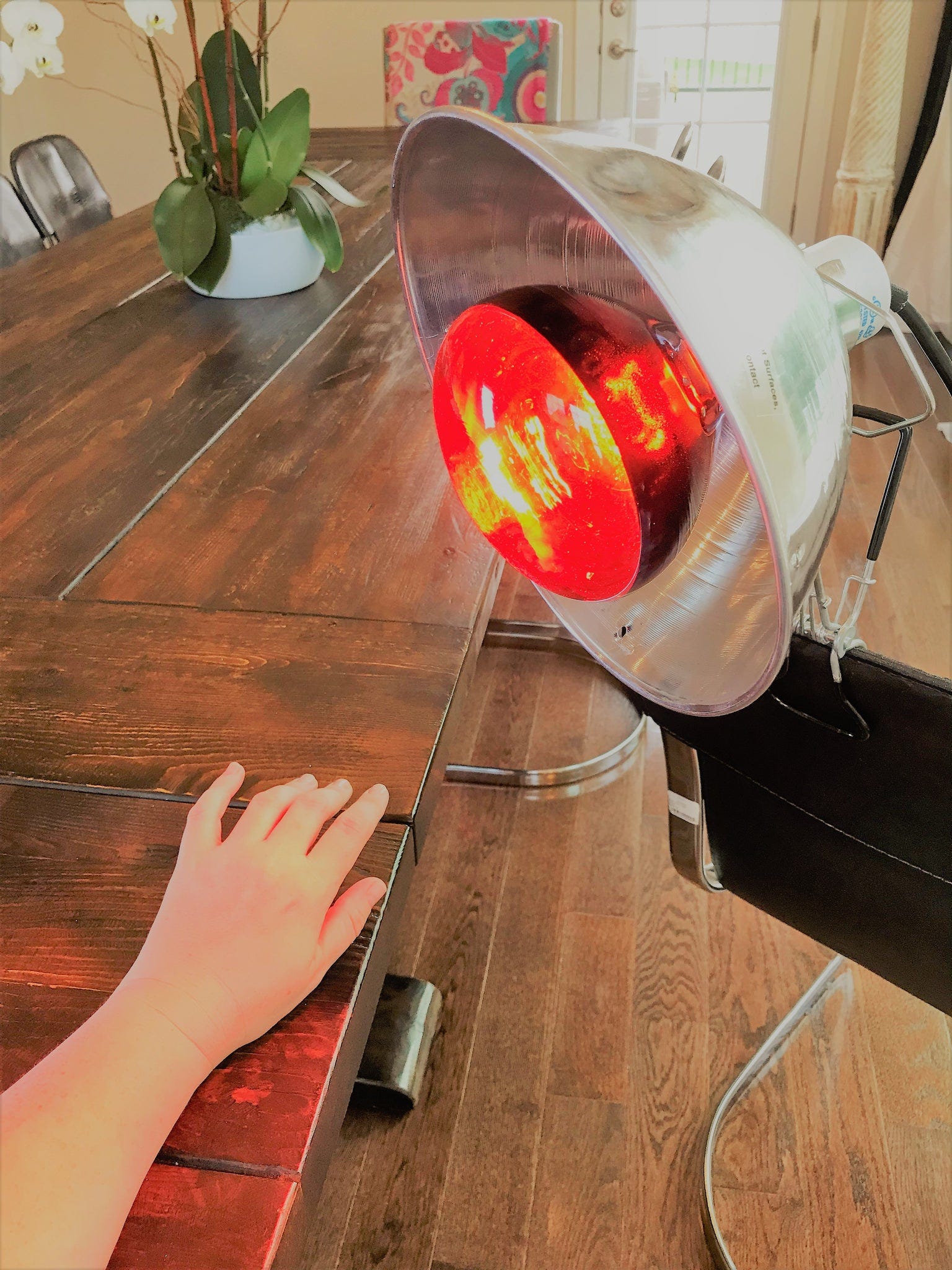
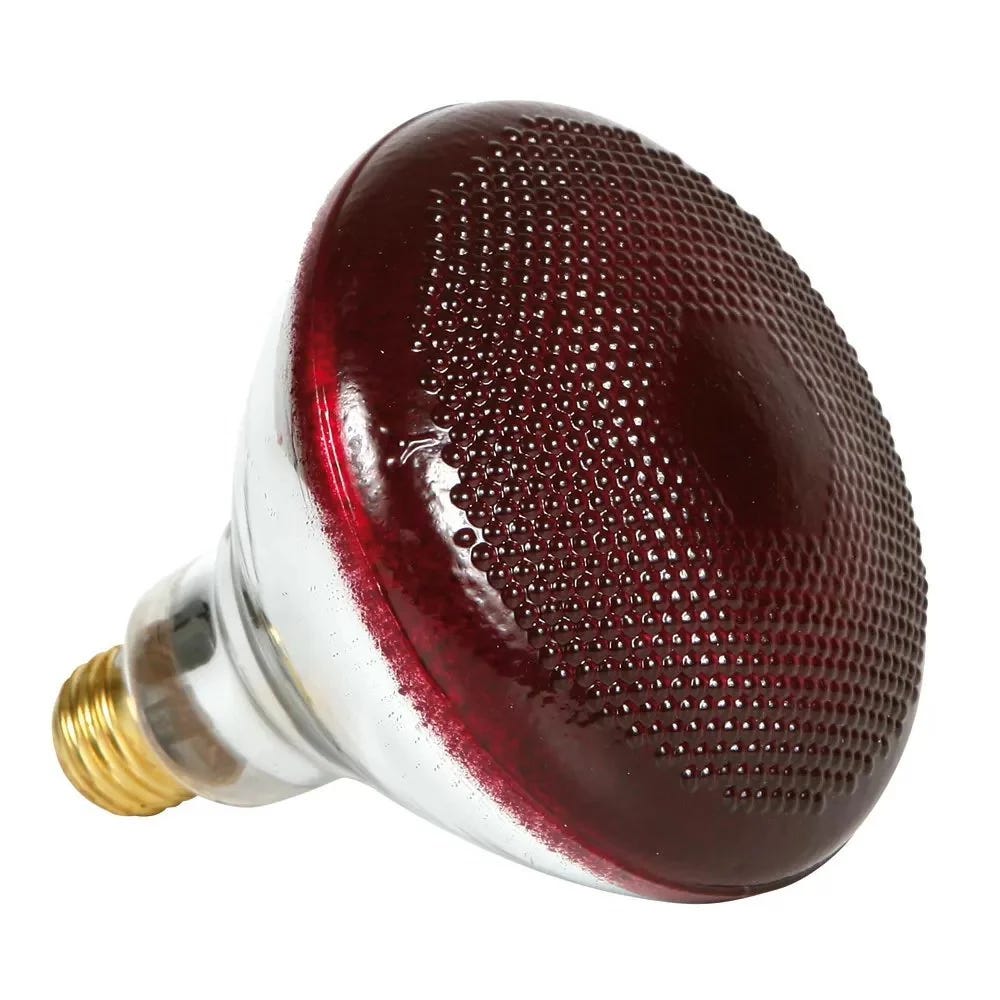
The most basic and one of the most effective light therapies comes in the form of the simple incandescent heat lamp. This device works by sending electricity through a filament contained within the vacuum of the bulb. This heating produces a balanced spectrum of light, a large portion of which comes in the form of infrared light, heat.
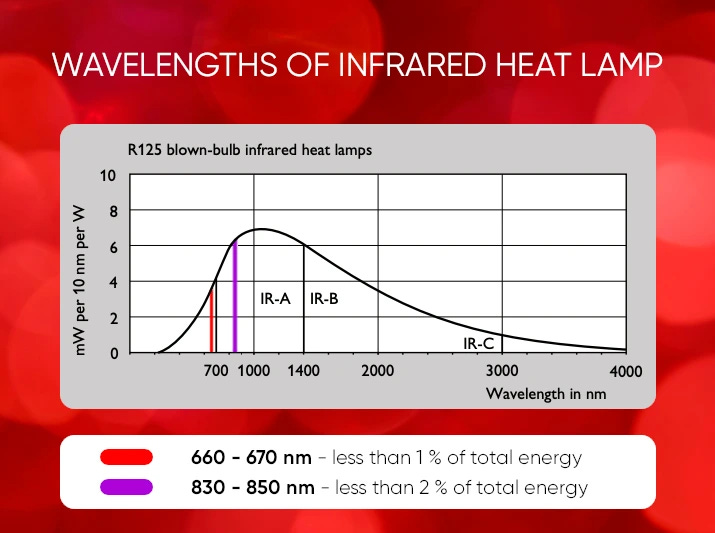
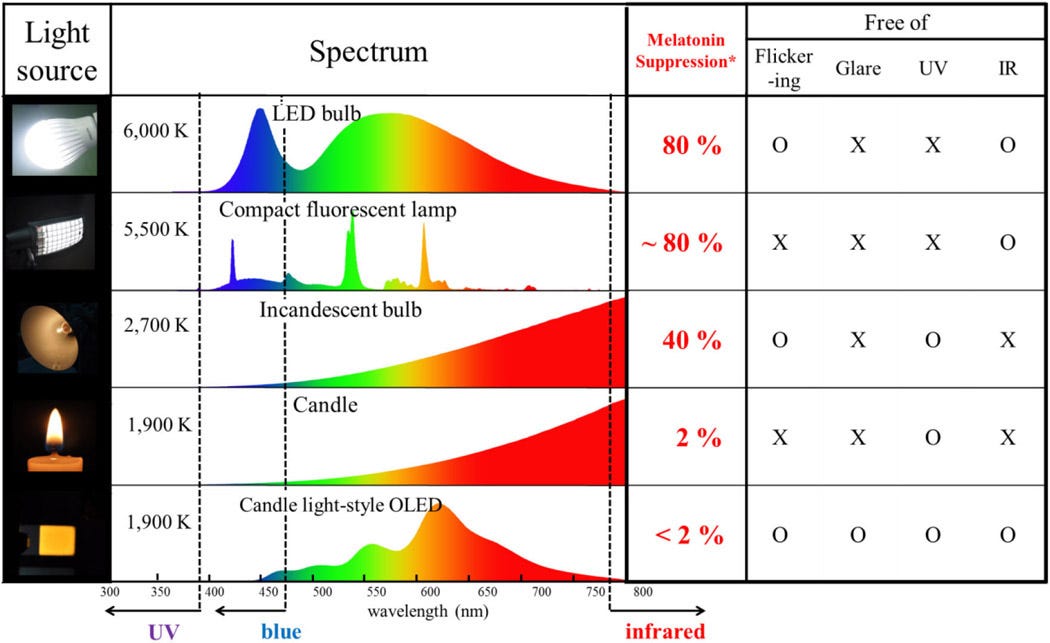
Critics will say that most of this light is “wasted” because it’s not concentrated in the few wavelengths of red and near infrared light that has been shown to be “most effective” in the research —630, 660, 810, 850 (nm). This may be true but the light given off by a heat lamp more closely resembles natural forms of light like the sun or fire. Note the smooth slope (below) rather than the drastic spikes, reflecting a balanced light profile.
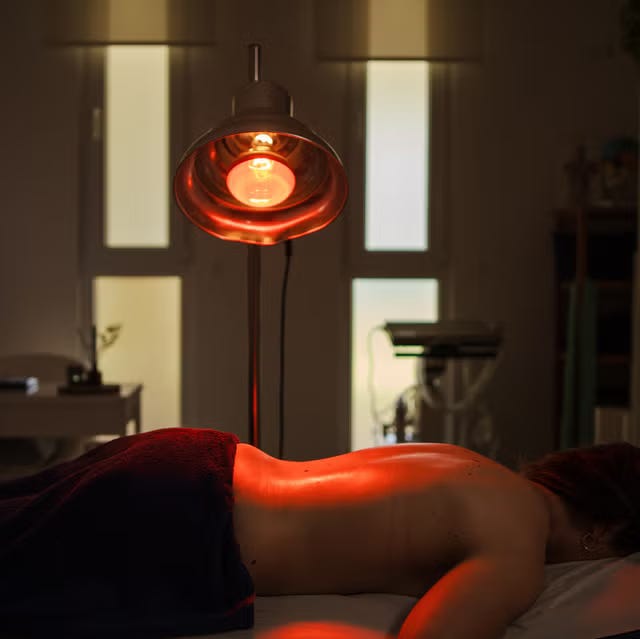
Of course this doesn’t make them better, it just makes it slightly more coherent with what you may experience naturally. For this reason they are often considered a safe and moderately effective option for a variety of uses. This can include shining broadly upon your body, targeting specific areas, or using multiple to create a form of sauna. They also double as illumination for spaces, but remember that they do indeed get hot and are not necessarily efficient in terms of energy usage.
All of these factors make heat lamps a perfect gateway drug, or device, for people who are either unsure or don’t want to invest a lot of money into light therapies. Even for experienced users with other types of devices, heat lamps often form the backbone of their regimen because of their ease of use and balanced light spectrum. They are best paired with LED devices that will provide more power in the “active” portions of the spectrum.
Heat lamps are also widely available as you can make a trip to your local hardware store and pick up a serviceable bulb(s) that you can use right away. Other equipment that you will need with the bulb includes a sturdy socket and holder. Something that can bear the high temperatures and keep the bulb safe from breaking. Again you could go to the same hardware store and purchase a metal reflector with a clamp. This can then be attached to whatever you have on hand, wherever you plan to use your device.
Does the quality of the bulb matter? Some companies like SaunaSpace have special incandescent bulbs that emit more biologically relevant wavelengths that people fawn over. However these bulbs cost $270 each, not really practical for most people when you need to replace 3 of them at once. If you have the money then sure, by all means, products like this are great but they aren’t necessary. Cheaper bulbs can be equally as effective for most people, especially those just getting into light therapies.
One drawback of incandescent is that they generate a considerable electric field, strong enough to be mindful of. Now you aren’t going to be using these lights close to your body because of the amount of heat they give off but if you plan on using multiple lights at once then it would be a good idea to ground your bulbs.
How to Ground Your Heat Lamp
You can buy grounded ceramic light sockets or heat lamp reflectors with a ground wire. If you already have a setup you can also do this yourself though it does take a little bit of work and competence. If you’re unsure of yourself then a ready made one will likely do you well. When your lights are grounded you can more safely put multiple bulbs together in an array.
Example Heat Lamps:
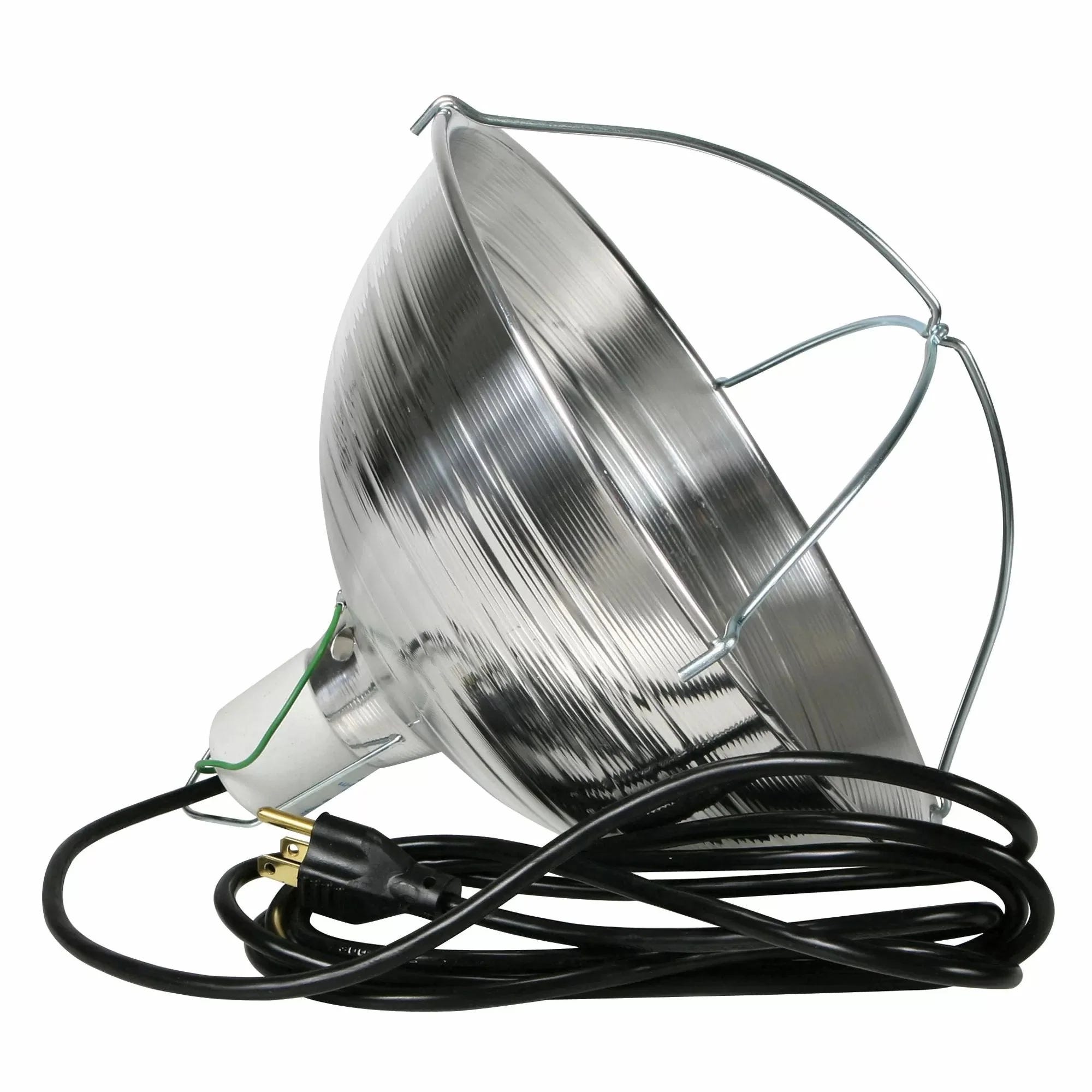
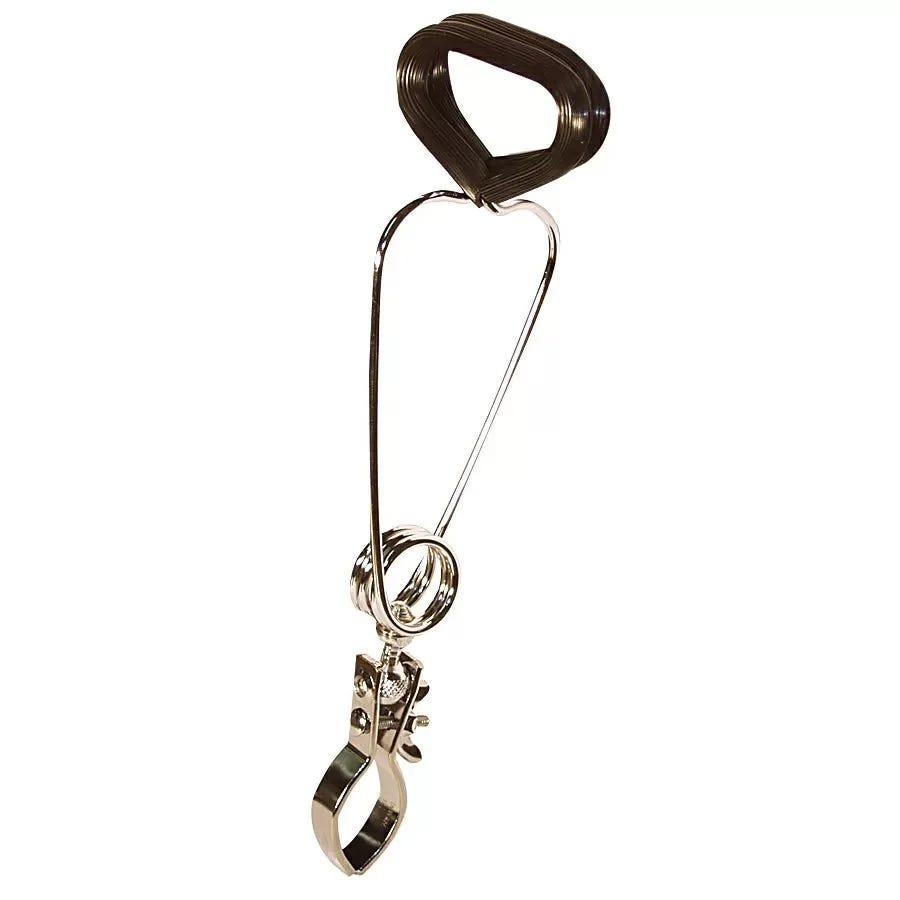
QC Supply Heavy Duty Hard Glass Lamp
LEDs
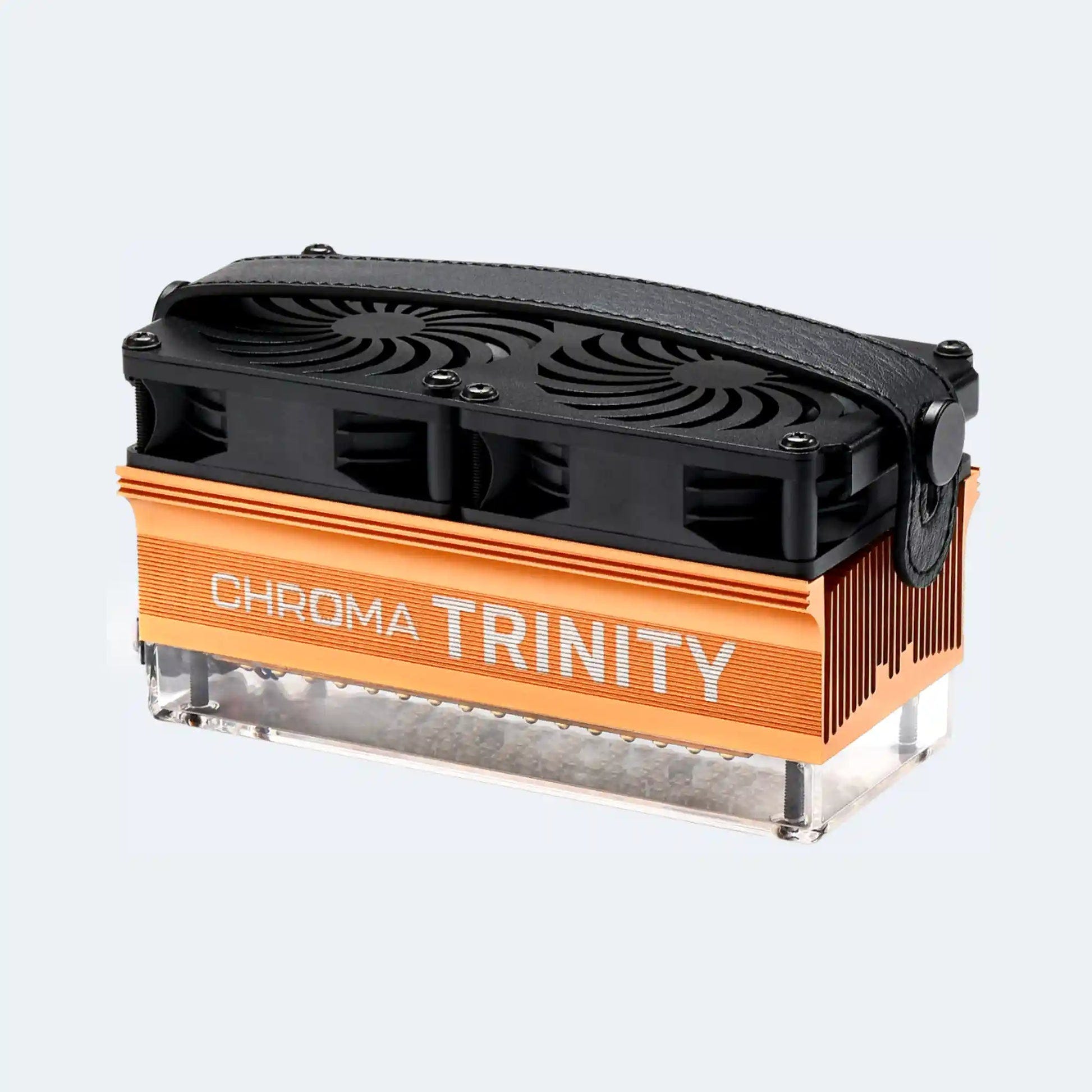
The next step after incandescents would be LED devices. These contain light emitting diodes that produce narrow bands of light. Most will have wavelengths that have been documented as being the most biologically active, meaning that in experiments they generate the greatest responses from cells or produce the most desired effects in organisms.
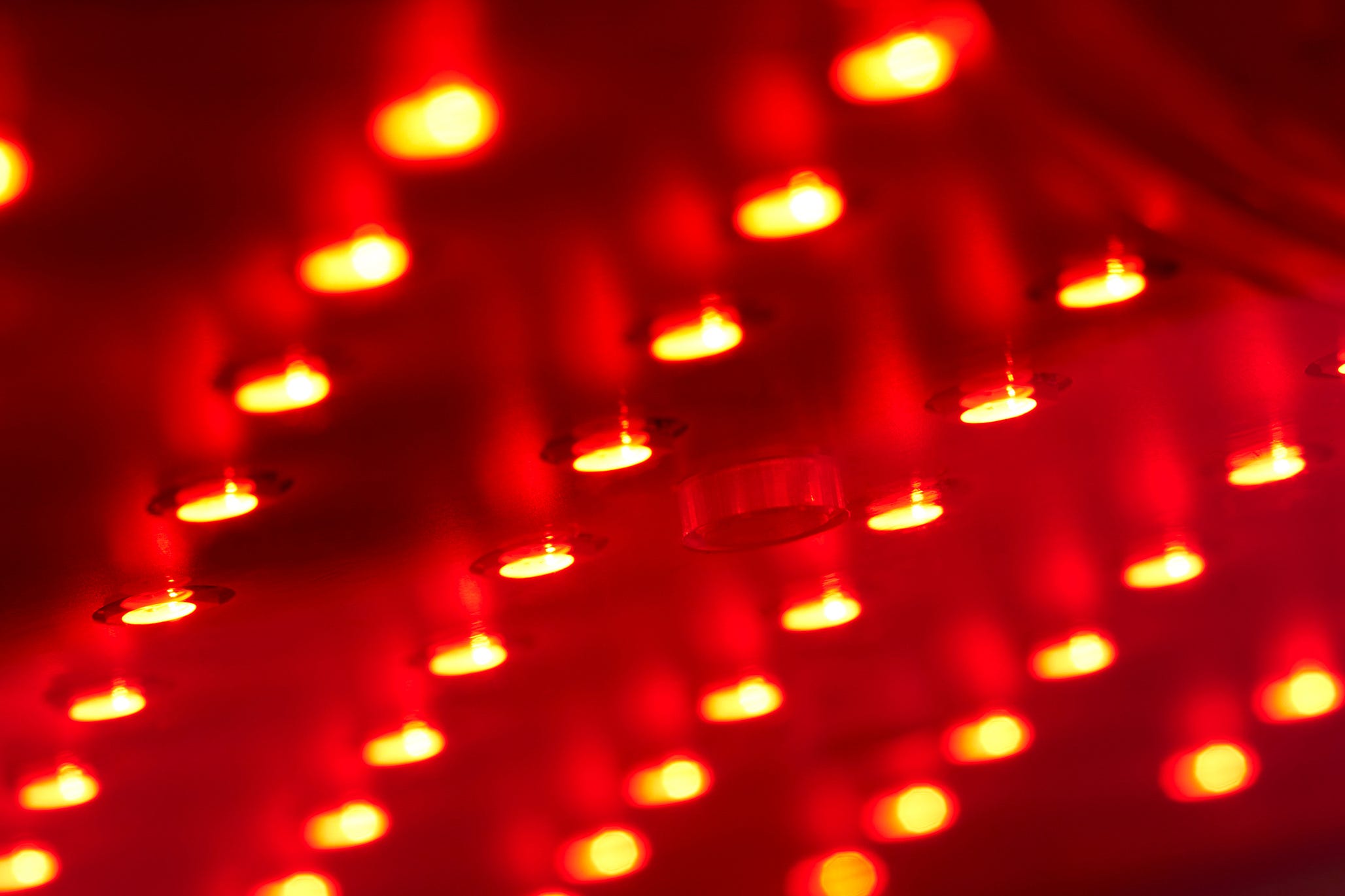
Compared to something like a heat lamp, an equivalent LED device would put out considerably more of these desired wavelengths. In theory, this makes them more potent at stimulating some of the effects that “red light therapy” is designed for —stimulating metabolism within the mitochondria and structuring water within cells. LEDs also produce far less infrared light (heat) and can generally be tolerated for longer periods of time than incandescents when necessary. Some can even be used directly on the skin.
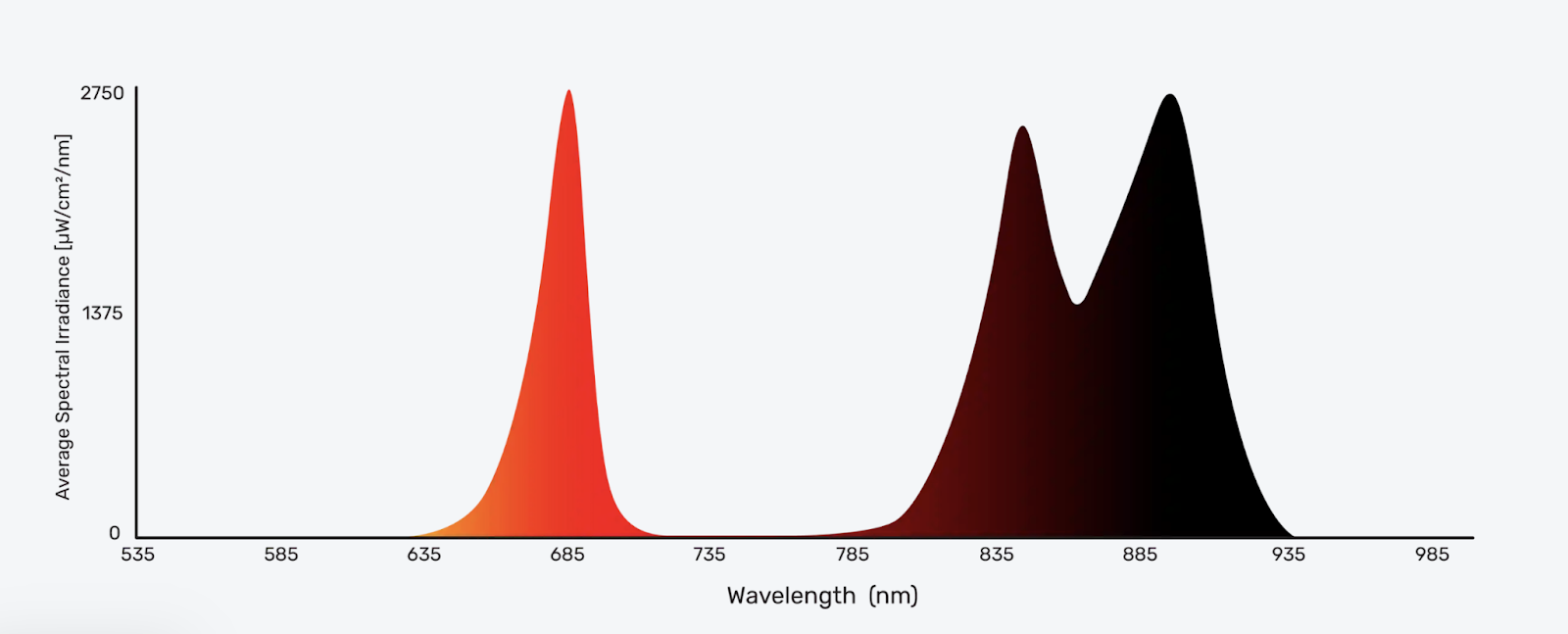
There is concern from some that this is biologically incoherent, not in line with our physiology. Supplementing narrow bands of light may create “imbalances” or won’t be tolerated well, at least that is the argument given. This is a perfectly valid concern as LEDs produce light that does not really resemble what we’d get from the sun. As you can see below, there are several sharp peaks at specific points in the light spectrum, again reflecting the most potent forms of red and near infrared light.
However supplementing light can be thought of similarly to supplementing other nutrients. You can take 100 mg of thiamine HCL, something that would be impossible “naturally”, and experience tremendous benefits. You could even do so for years on end to great effect, solving health issues and keeping them at bay. No this isn’t a perfect comparison but does provide some parallels that hopefully allow you to understand.
Many of the studies that show adverse effects with narrower bands of light were likely either far too strong and/or were done for far too long. This is similar to a study where a vitamin or nutrient is administered in hundreds to thousands of times the amount that anyone would ever consume. The resulting ill-effects then used as “proof” that said nutrient is actually harmful. In reality this means that less is often more with LEDs, opting for shorter, more frequent sessions rather than long ones.
The concerns about LED and other narrow band light therapies are really only relevant in a vacuum. If you received no other light and instead only narrow bands from LEDs you might have a problem. Just like if you only took vitamins and never ate any food. Outside the vacuum, you should be combining as many forms of light as possible to broaden your photonic nutrient profile, making this possibility less likely.
LED devices should only be one part of your routine and should be combined with sunlight and/or incandescents. This doesn’t necessarily need to be at the same time but you are using a $1000 LED panel, adding in a $30 heat lamp or two to your setup can add a more balanced amount of light. Even better if you’re able to get full spectrum sunlight fairly regularly.
Another note is that light, specifically red and infrared must be accompanied by other nutrients in order to work. This includes oxygen (air), glucose (carbs), and micronutrients like magnesium, thiamine (B1), and more. Since LEDs are so potent at stimulating the mitochondria they can also deplete already depleted nutrient stores. For this reason they should not be treated as a lone therapy in themselves but as a boost or stimulus that allows you to utilize these other nutrients effectively.
For good measure, make sure you are nourished before or after a light therapy session. Glycogen stores should be topped off and you should ideally have some nutrient dense foods or supplement minerals/vitamins prior or after use. This will ensure that the stimulation that comes from the light is not in vain.
Panels
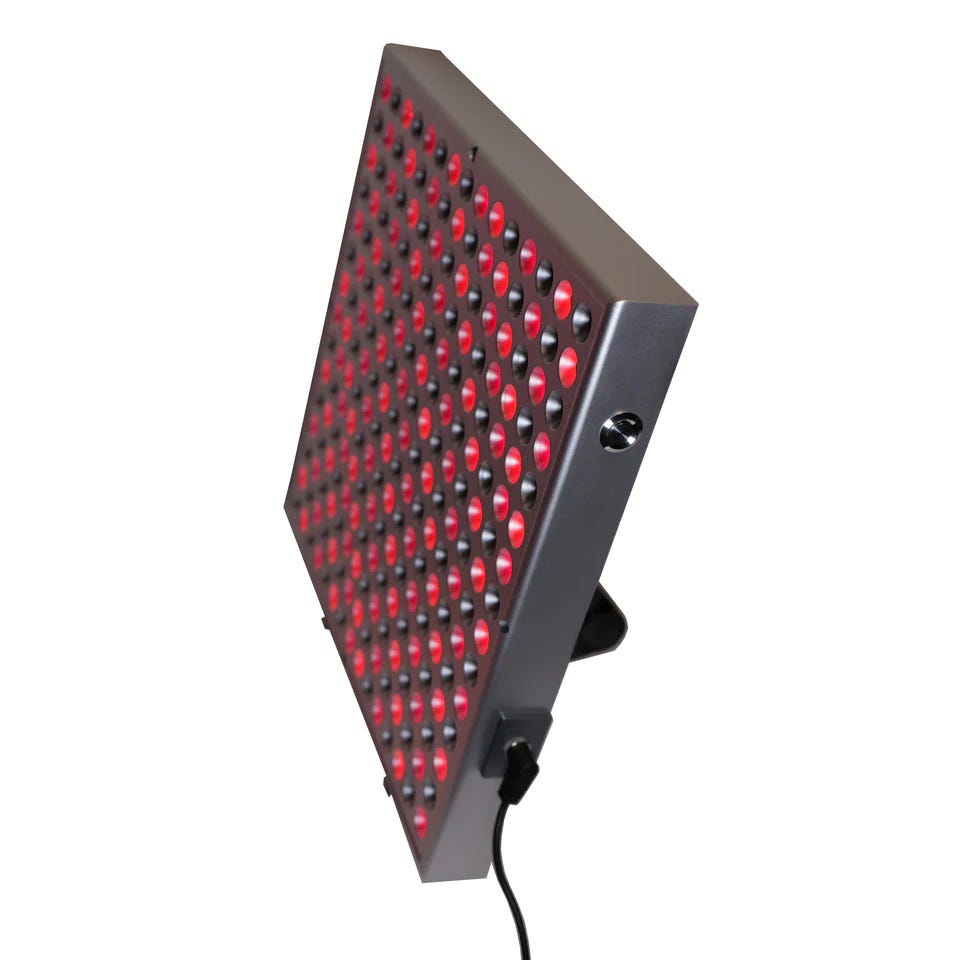
LED panels are devices made of several to dozens, sometimes even hundreds, of LEDs on a large display. Their size and power usually lends to them being used for systemic treatments as they can illuminate large swathes of the body at once. Since they are rather indiscriminate, they are suited for just about anything.
You can increase the amount of light that reaches your body by positioning mirrors, utilizing white painted walls, or draping survival blankets made of mylar on walls/screens. Mirrors are obviously superior but are going to be more expensive than the others. Mylar blankets are relatively inexpensive and can be pinned/taped to walls.
Mylar Blankets
Adding in reflectors limits the amount of wasted light, allowing you to reduce how much time you need to spend using them. They won’t be perfect but can allow you to get more out of whatever size panel you decide to use.
Using mirrors with panels
What should you look for and consider when choosing a panel? There are a few things that you should keep in mind:
An array of wavelengths (red and near infrared)
No or low flicker
Reduced EMF (DC power instead of AC)
These allow for you to get the type of light that you need while limiting anything that may cause problems like sub perceptible flicker from the LEDs and considerable amounts of EMF.
Example Panels:
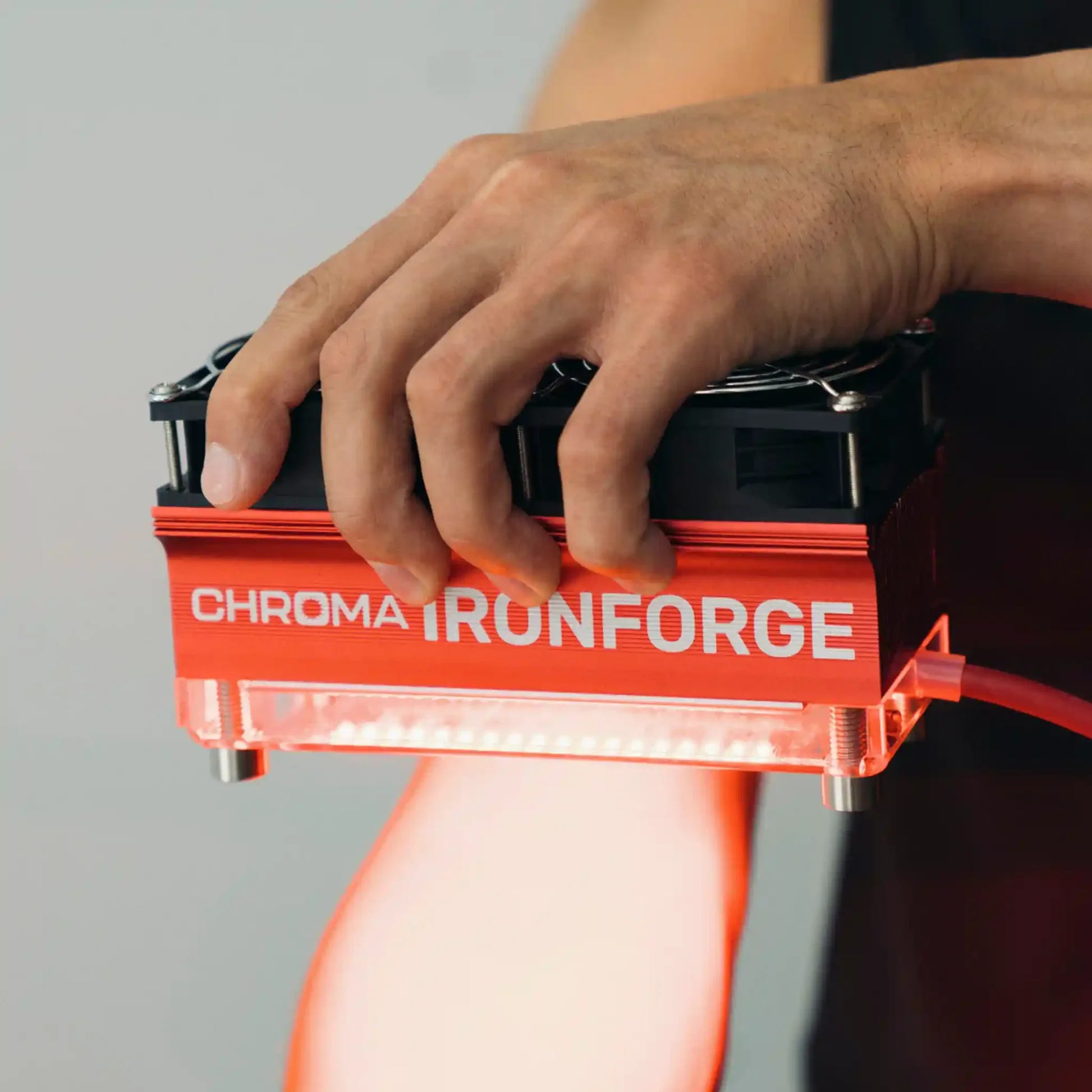
Chroma IronForge (use code: LIGHTUP for discount)

Topicals and Wearables
Panels are great for stimulating as much of the body as possible with light but do have some inherent downsides. Mainly, since these panels are rather large and cumbersome, you have to end up moving your body to fit them. This isn’t a big deal if your goal is just to soak up as much light as possible but does limit them if you have a certain spot that you’d like to treat.
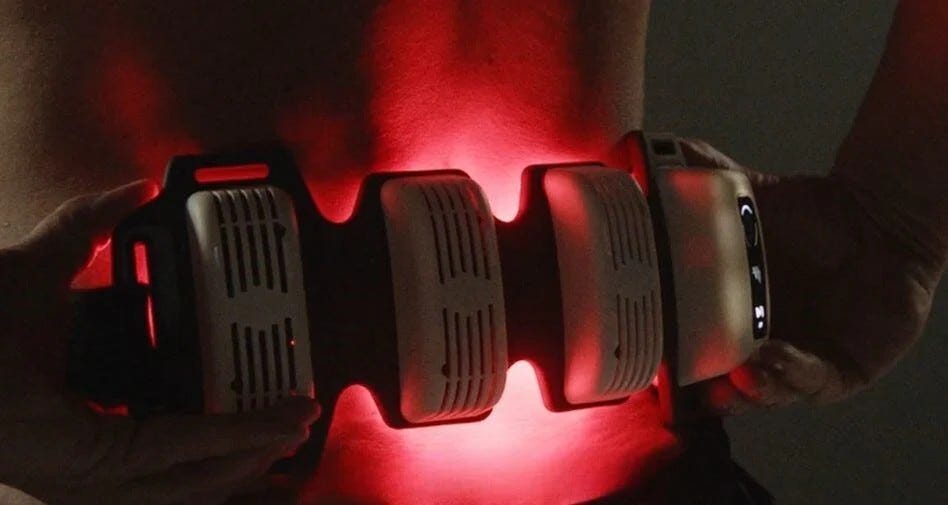
This is where wearable or topical devices come into play. These allow you to concentrate light on certain parts of your body, whether they be injuries or specific organs like the thyroid, thymus, liver, or intestines.
Placing the device right on the body also reduces how much light is reflected by the skin, meaning more can instead penetrate into tissue. This is important when you want to target organs deep to the skin, as getting more light to them is imperative. Heat lamps and panels will be greatly limited in this regard, as relatively little light can reach deep into the body, unless you’re able to contort your body to the device.
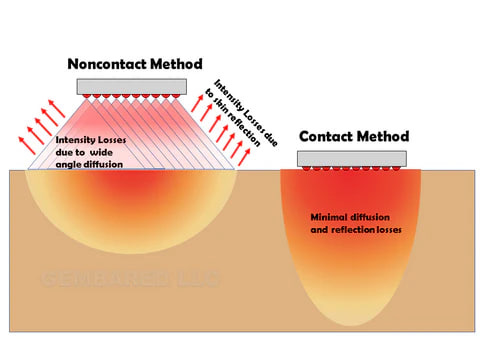
This is relevant if you’re someone who deals with pain or dysfunction in a certain region like the knee, shoulder, back, etcetera. Having a wearable device that you can use on this problem area can not only act as a form of acute pain relief but can help solve the issue over time.
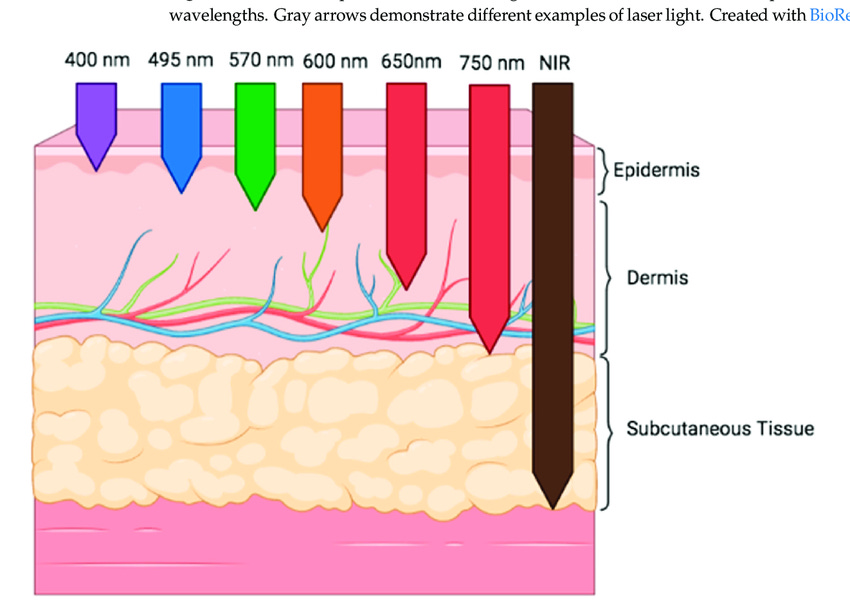
Wearables are also superior for those who wish to target certain areas of the body, those that may not get as much other light as they should. One of the most significant beneficiaries are the viscera: the intestines, stomach, liver, spleen, and so on. Since these organs are buried deep in the body, they would benefit from light being applied as close as possible, the skin.
This can help general function, improving motility, stomach/acid/bile secretions, and potentially even positively influencing the microbiome. It can also help acute instances, quelling stomach aches, nausea, and more. Personally, I’ve been able to end upset stomachs and headaches from gut irritation with just a few minutes of light shined on the abdomen.
Example Topicals:
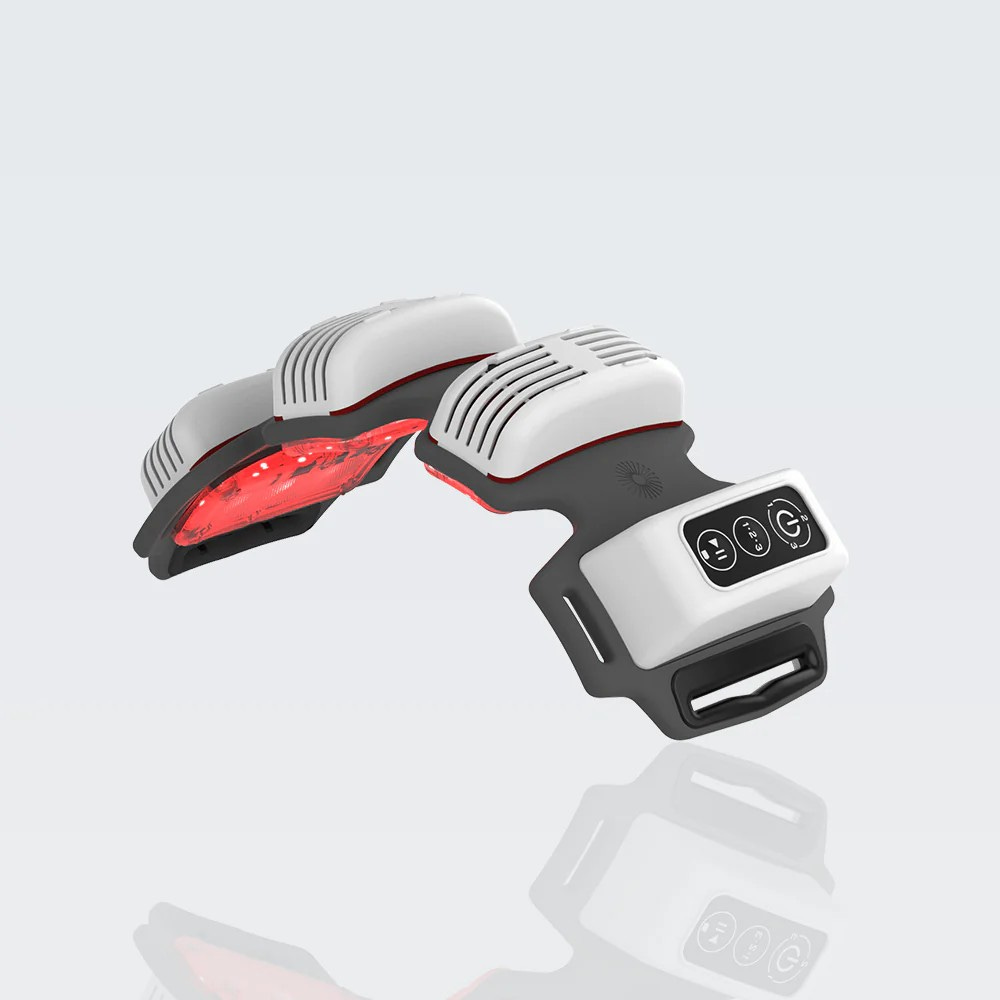
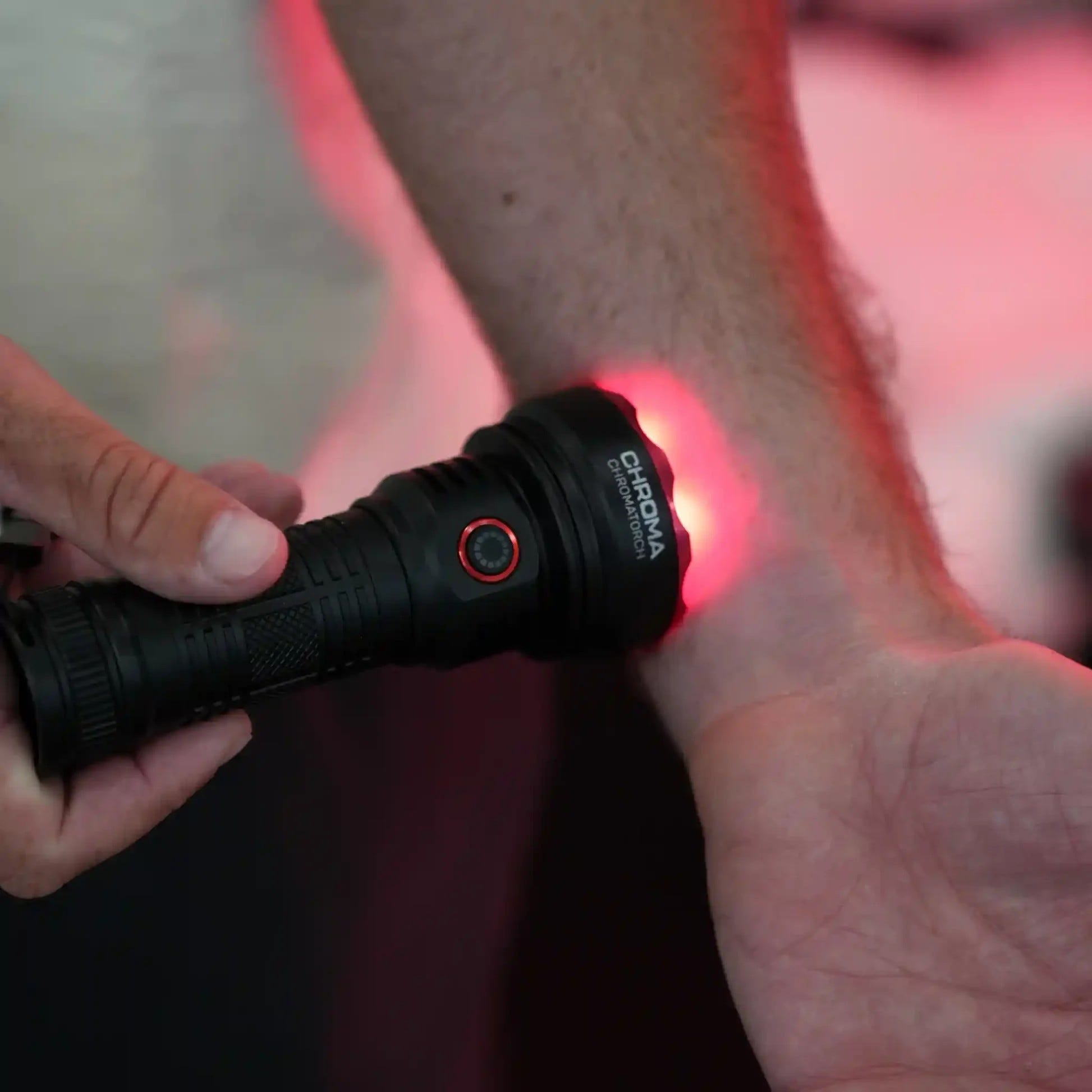
Chromatorch (use code: LIGHTUP for discount)
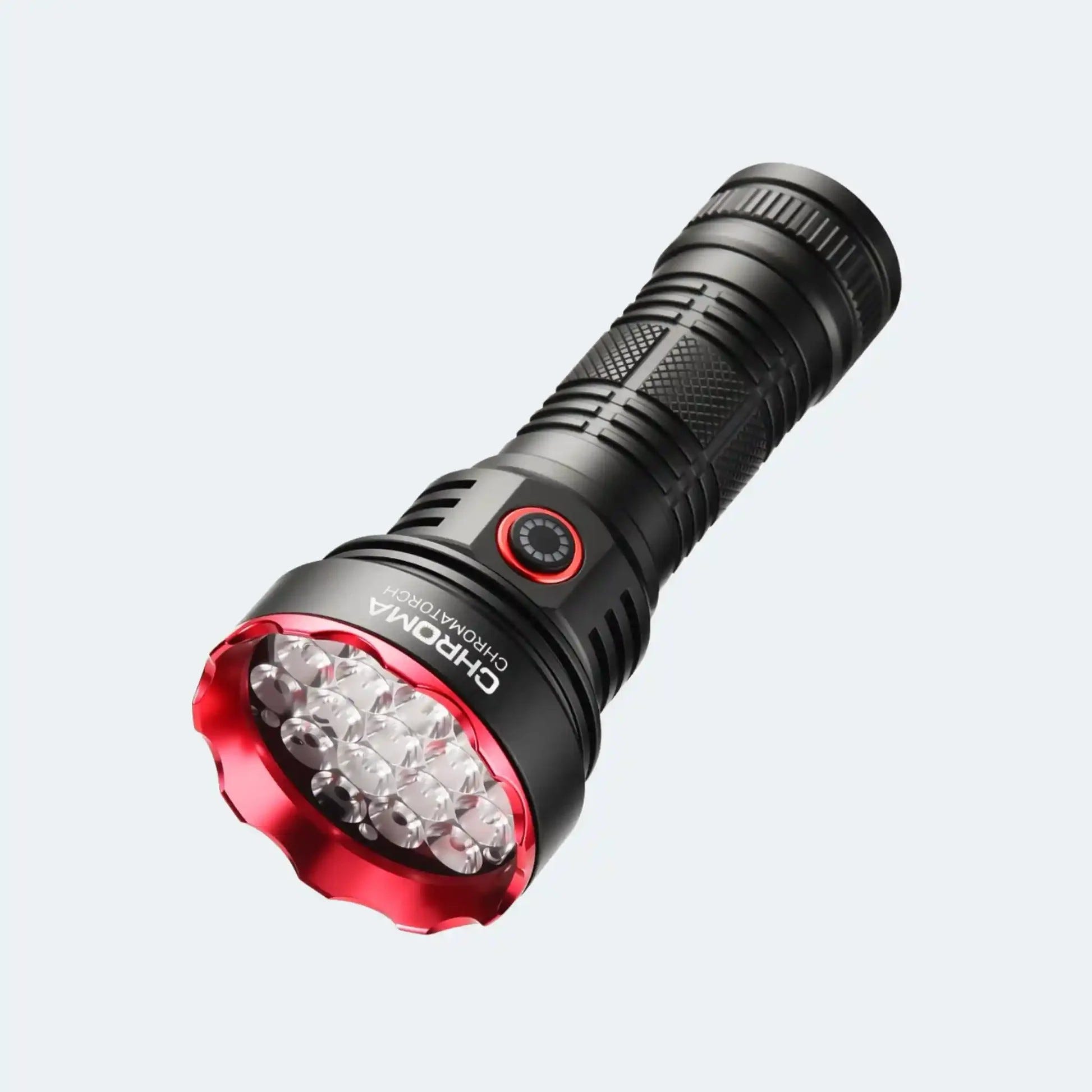
A couple of my favorite devices include the FlexBeam and the Chromatorch, both high quality, high powered units that can be used in a variety of manners. While more expensive, these are worth the price.
If this isn’t in your price range you can still find several usable devices from Amazon. These can be fairly strong and come in a variety of sizes. The build quality is always questionable as they can last for years or fall apart within a few months, this is the risk you take when choosing these types of units.
Purchasing an additional battery pack for these units can help drastically reduce the EMF that they will produce from being plugged into an outlet. The connectors to these devices may vary so be sure of what you have before purchasing an external battery pack.
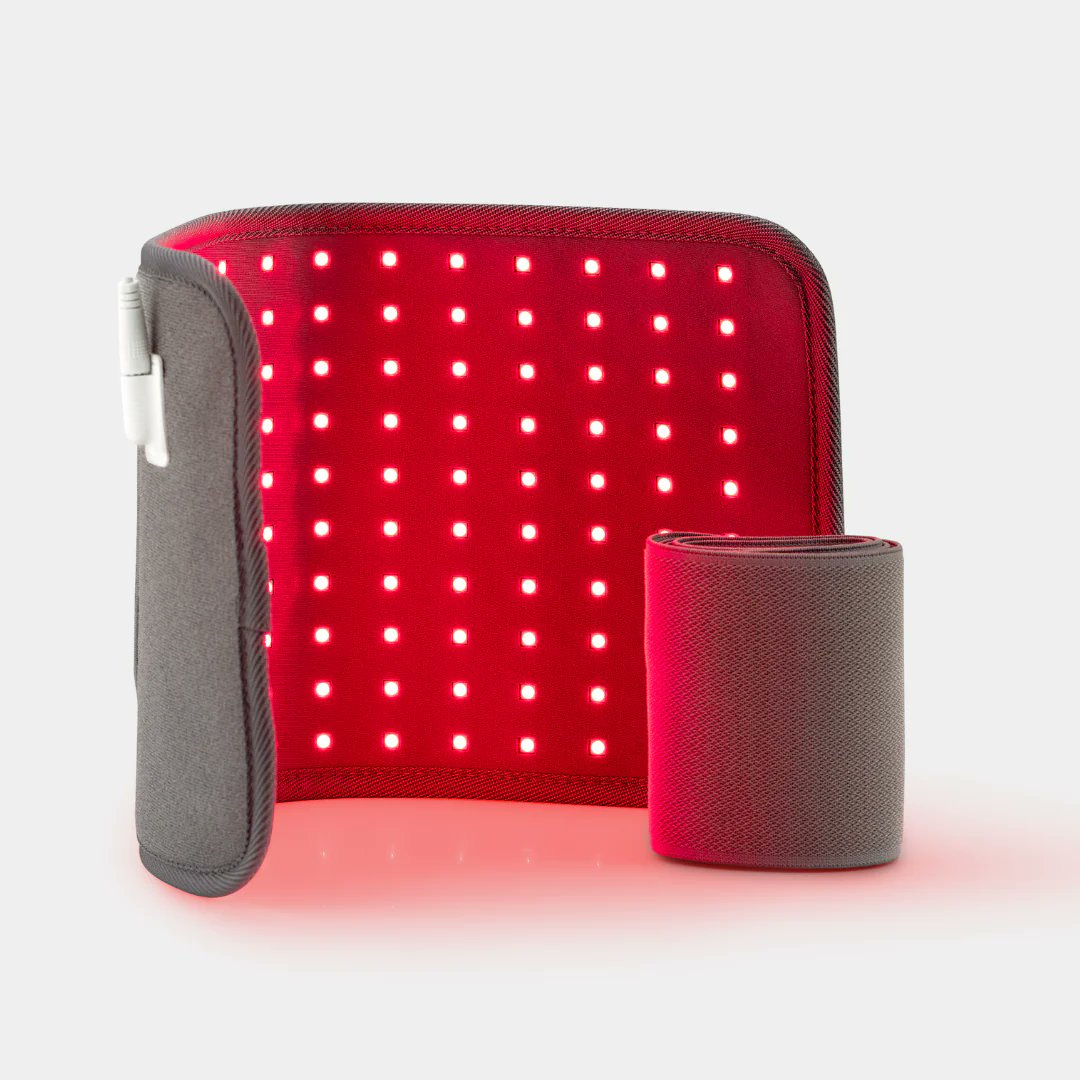
Other factors to consider would be power and wavelength distribution. Ideally you want something that produces something in the range of ~60–100 mW/cm² while containing both red and near infrared wavelengths. More power can be better for targeting deeper tissue but will also require shorter sessions. Less power won’t be useless, but will likely take longer to notice effects.
Specialty Wearables
Other organs that can benefit include the thyroid, thymus, brain, and gonads (mainly testes). Red and infrared light shined onto the area, ideally placed on the skin, will improve just about every metric of their function.
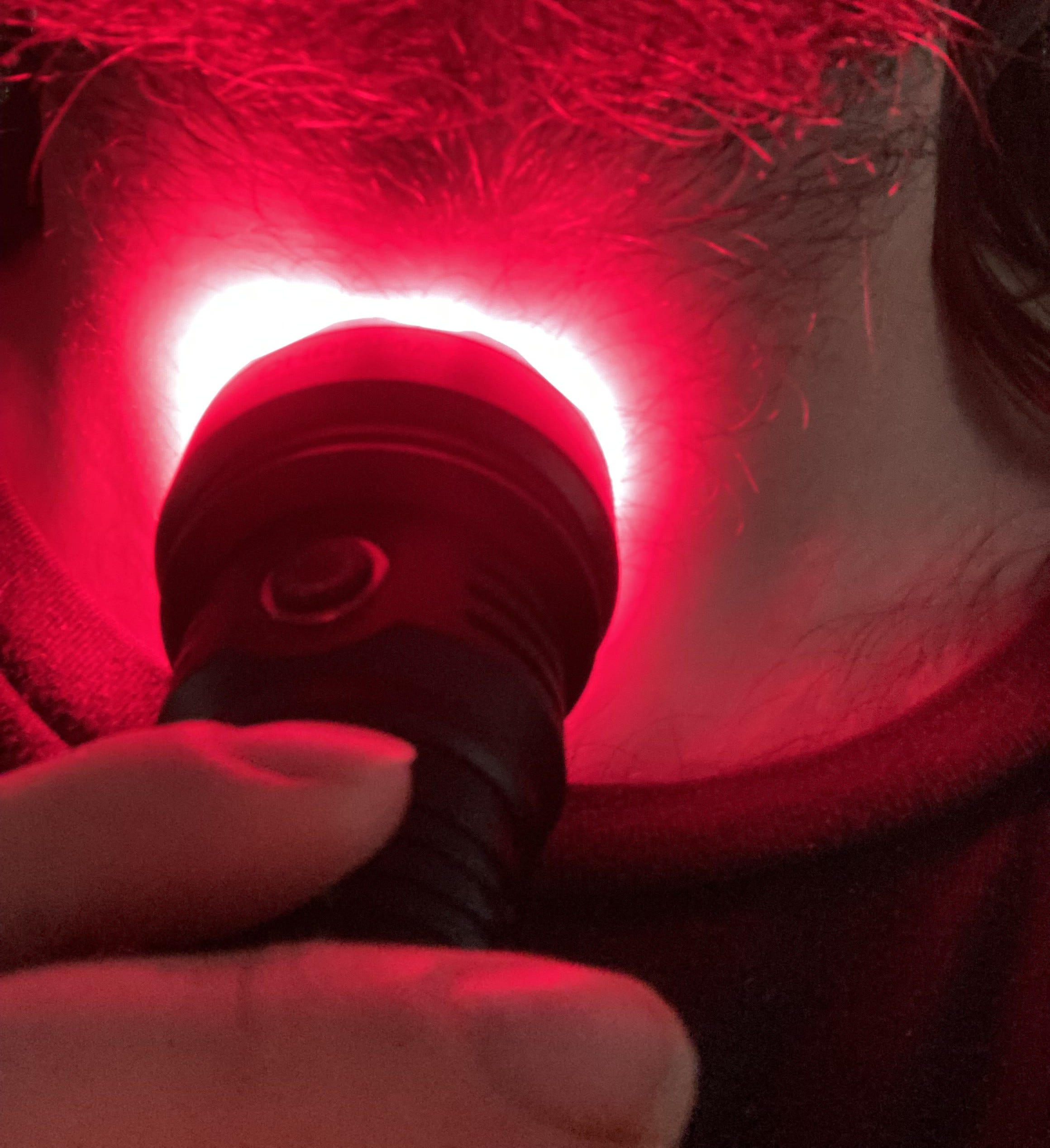
For even harder to reach places, specially built red light devices can be another worthwhile purchase. Some of these include ones for the nose, shining light into the nasal passages and one that’s shaped like a mouthguard, illuminating the gums and teeth.
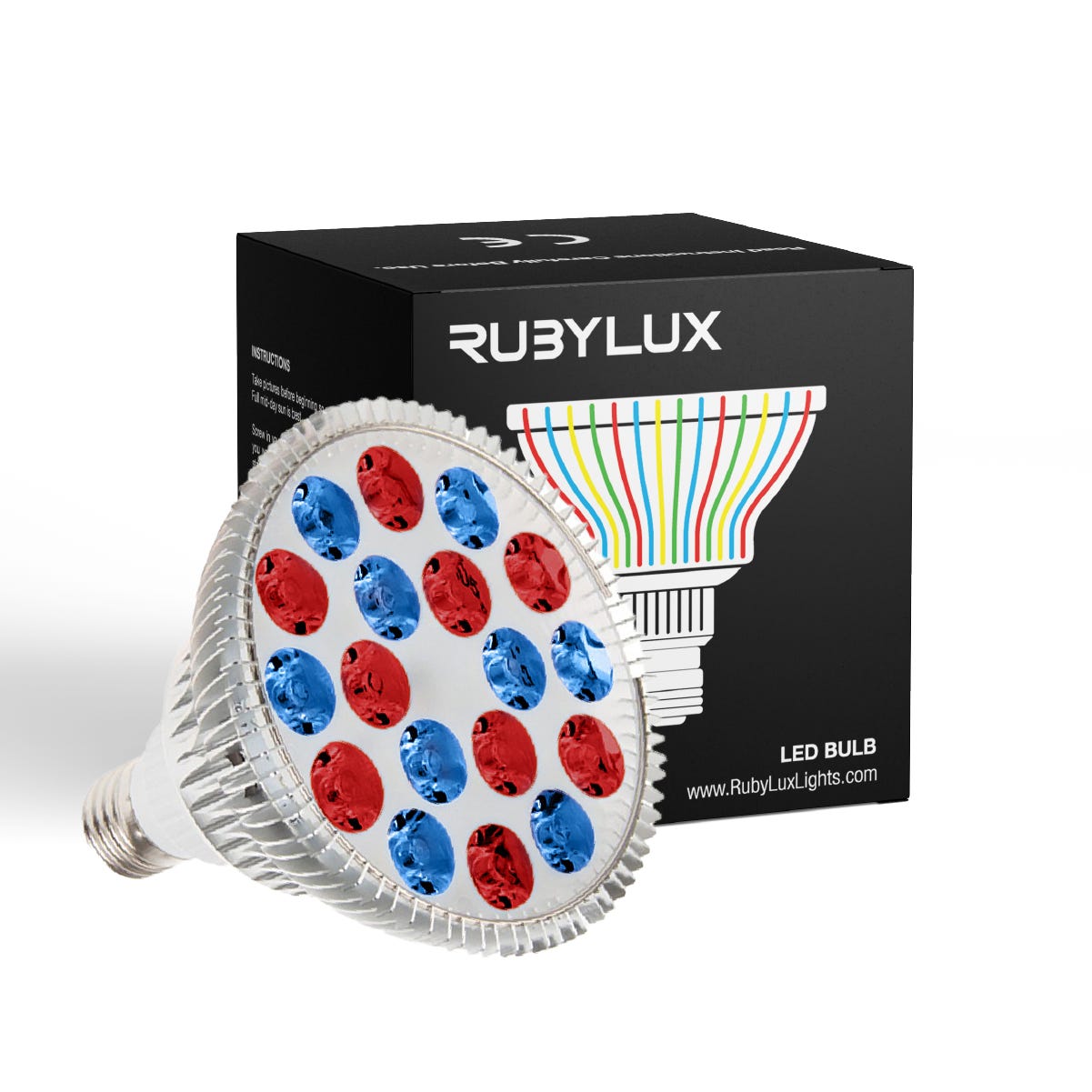
RubyLux Bionase Nasal Red Light
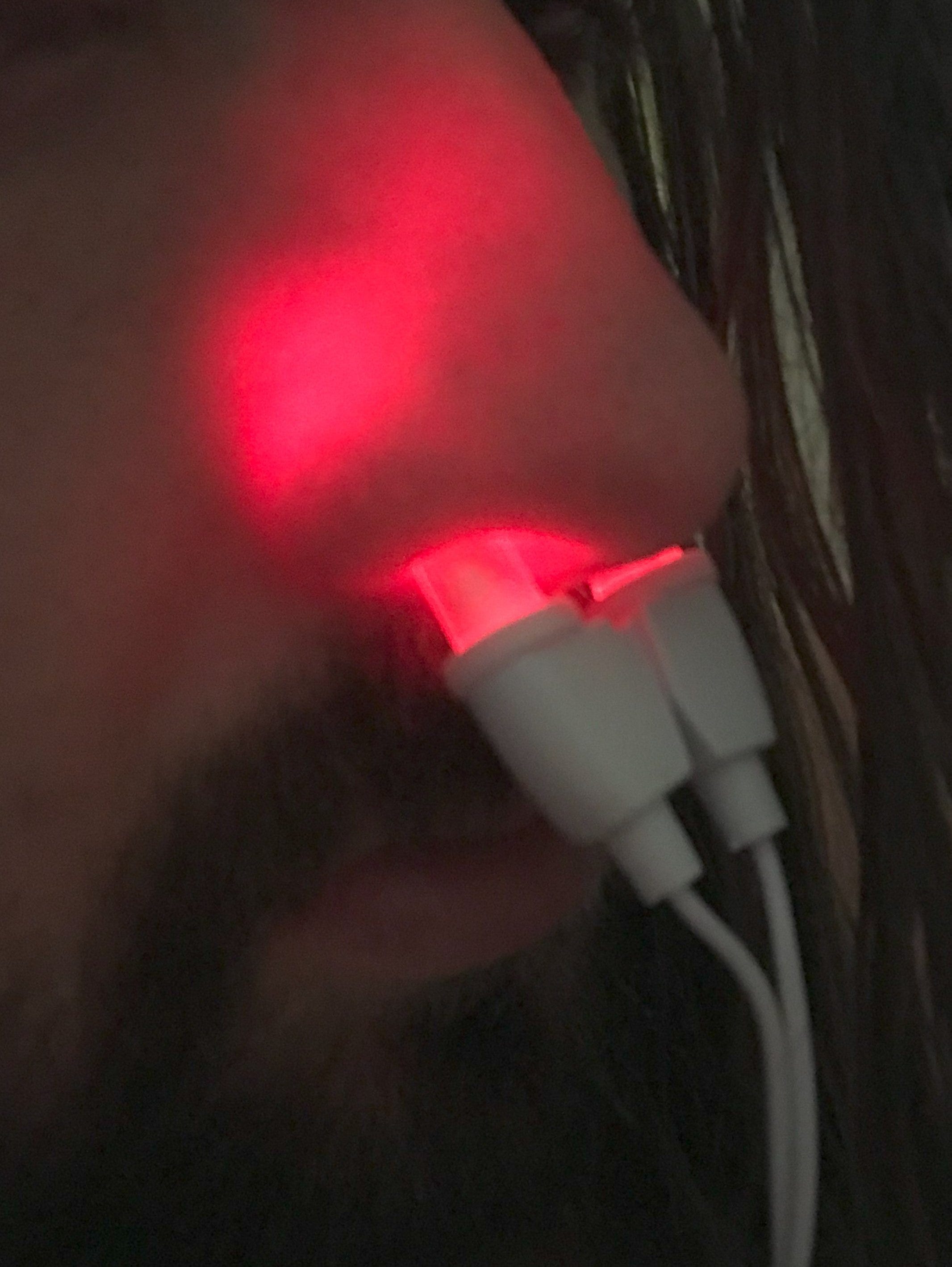
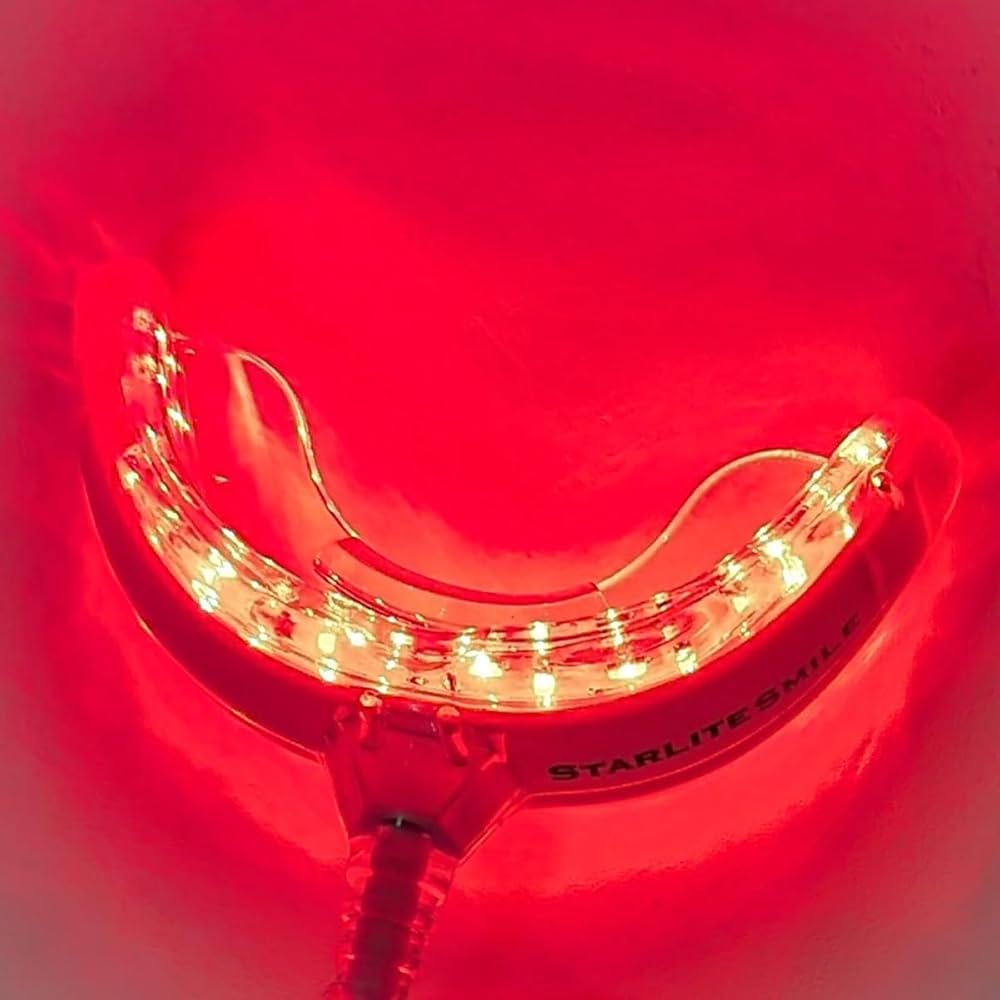
These two examples would be great for someone dealing with gum issues and the other for helping to improve the ability to breathe through the nose. Yes there is much more that goes into these two issues but devices like those can aid an individual nonetheless.
CurrentBody Red Light Therapy Mask
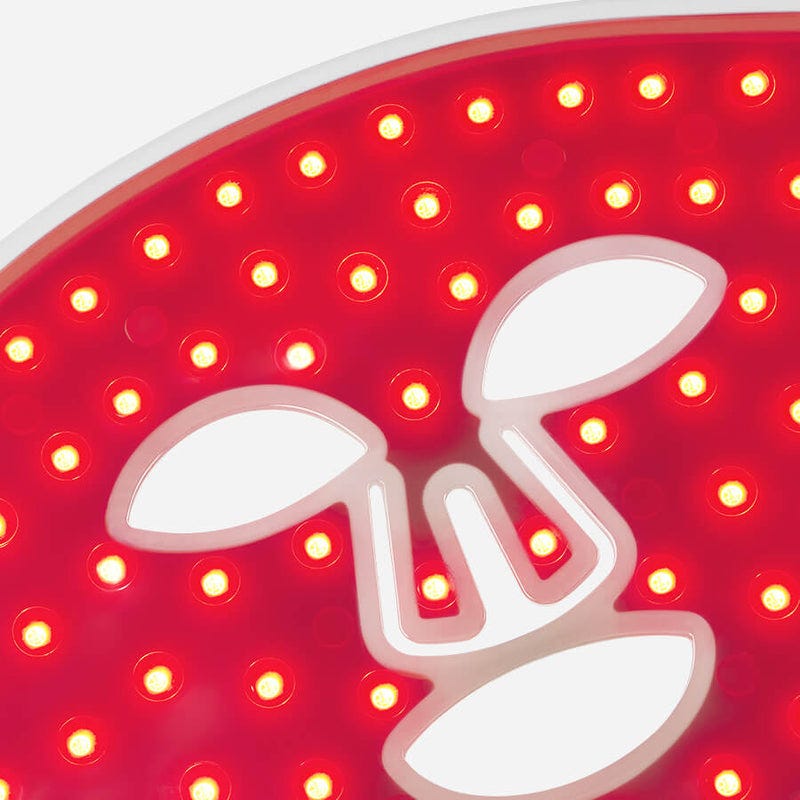
Another popular form of red light device is the facemask. While somewhat unsettling to look at while in use, they are an interesting product that offers unparalleled benefits for the face. Ideally you want one with both red and NIR to allow the light to penetrate into the muscle, fascia, and potentially even bone of the face. These are generally lower in power but that may not be as necessary for the area. Just like with the budget pad, opt for a battery pack to reduce EMF, otherwise there are many solid options.
Other forms of LED devices
Red and infrared light isn’t alone in its effects on biology. While these wavelengths are the most stimulating on a fundamental level, all other light is active in some manner. While green, blue, and UV doesn’t necessarily structure water and improve mitochondrial function and eventual ATP generation directly they can be used for other purposes.
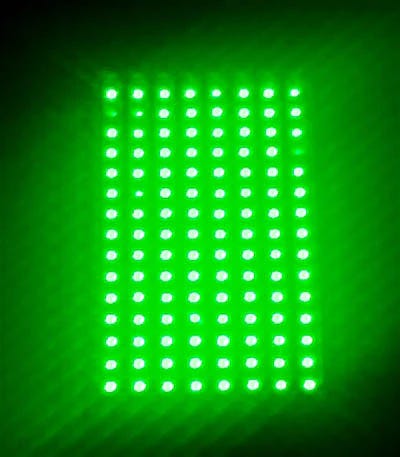
Mostly, visible light like green, blue, and UV stimulates photoreceptors —known as opsins— in the eyes and skin. These are responsible for regulating countless cellular processes in line within circadian rhythm. Isolated blue light can even be cytotoxic, which is obviously bad in some circumstances but can act as an antiseptic and is often used to treat acne and other skin conditions.
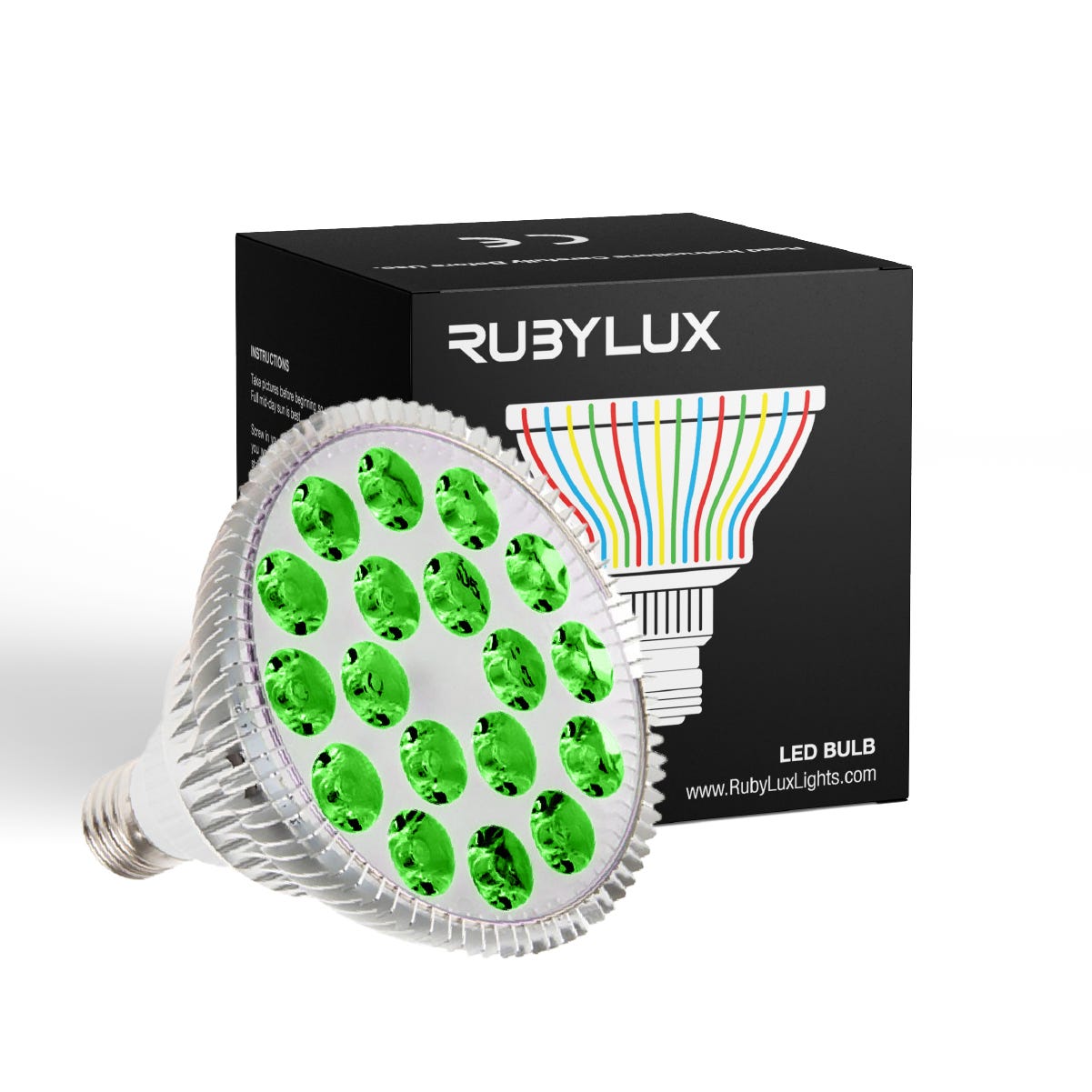
These are slightly more specialized devices and are likely not necessary for most people. Keep in mind that these should be used in concurrence with the sun, meaning that you should only use any blue light during the day.
UV Lights
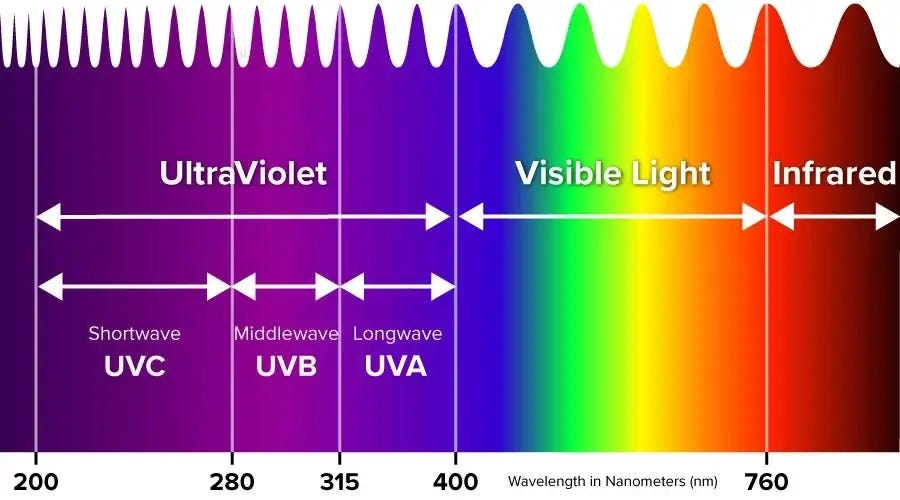
UV lamps are normally the final piece of the light puzzle, representing the highest frequencies and shortest wavelengths on the light spectrum. Known for its role in the synthesis of vitamin D, UV light is also essential for circadian regulation, as its presence in midday sun is meant to act as a signal for your entire organism.
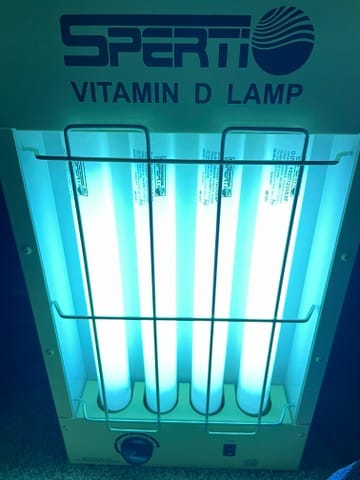
Supplemental UV light can accomplish both these things, stimulating vitamin D synthesis and also aligning your circadian rhythm when that midday sun is absent. This could be from clouds or just a general lack of sunlight in higher latitudes during winter. Regardless, there are people who would absolutely benefit from additional UV light at some point of the year. No this again will not replace that which comes from the sun, but adds enough of a boost to offset the stress of darkness.
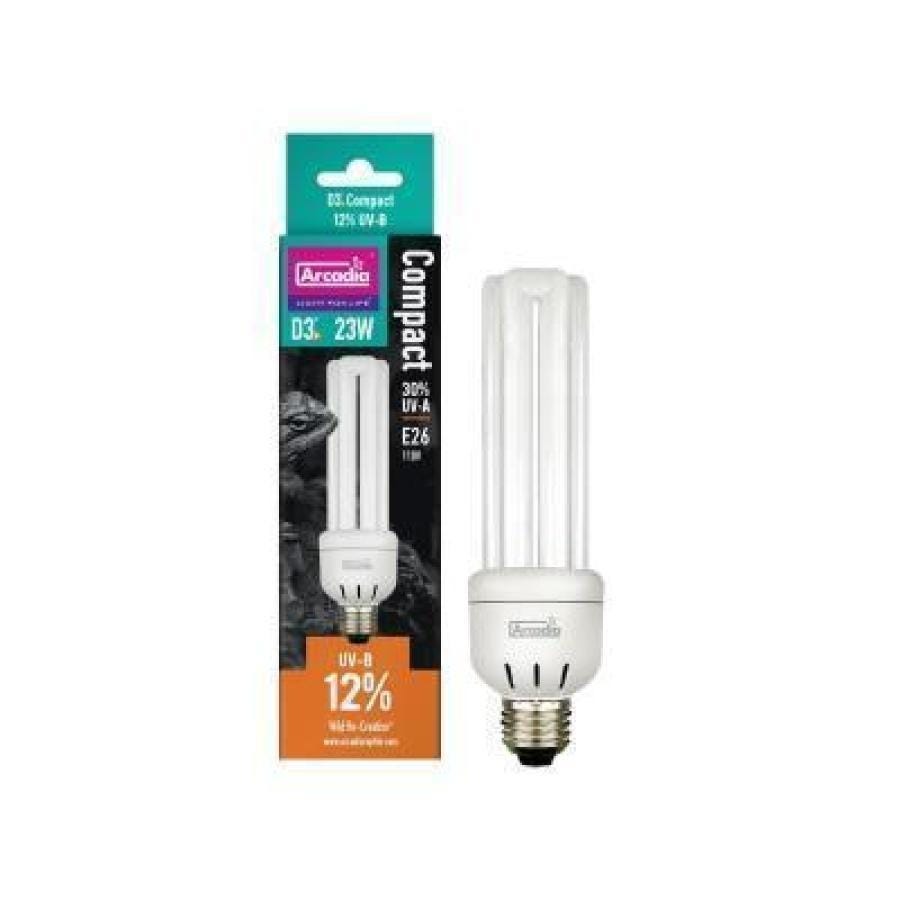
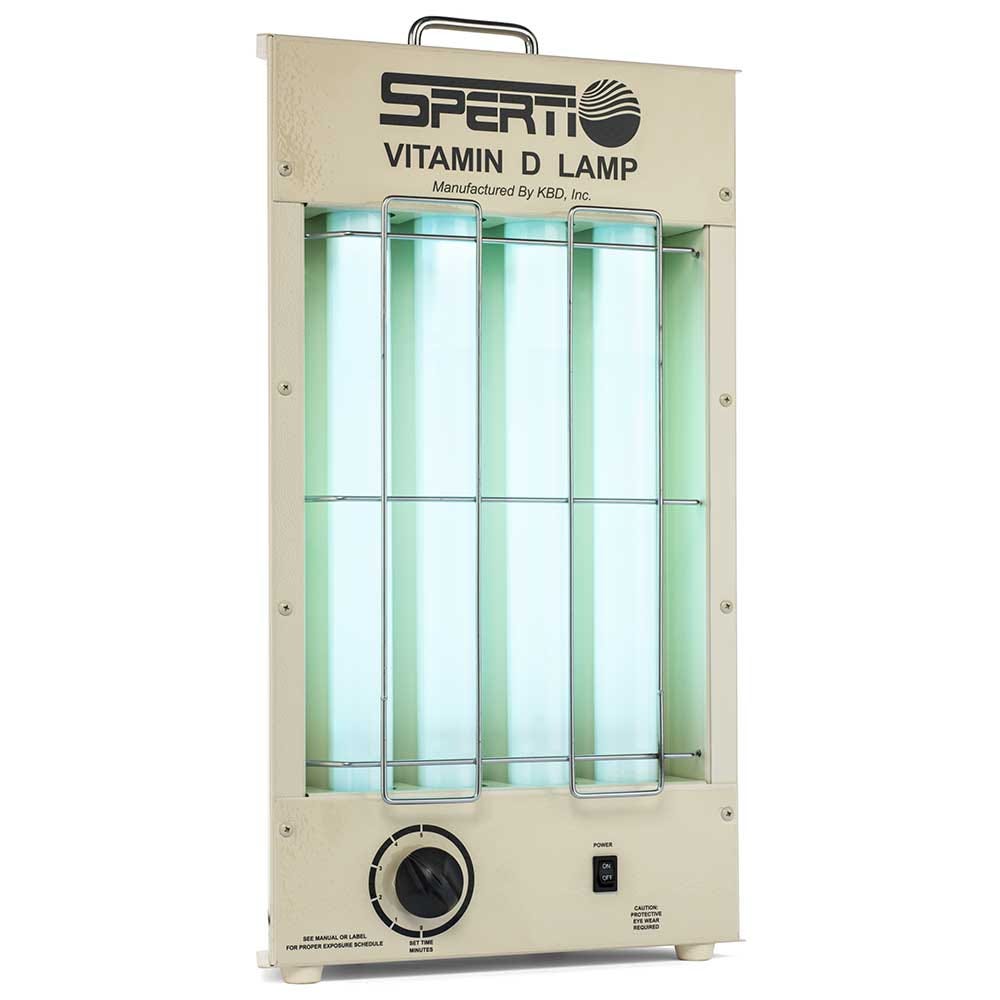
There are both LED and non-LED lights for UV therapies, with a range of prices. This includes a $3k LED panel, a $500 vitamin D lamp, and a $50 reptile bulb. Each of these have
Most UV lights have a blend of UVA and UVB wavelengths, depending on what they’re built for. UVB is what is used to synthesize vitamin D and UVA stimulates opsins. Keep this in mind for what your wants and needs are. If you’re in dire need of vitamin D support, look for one with substantial UVB. If you’re just looking for something that provides broader circadian benefits than one with more UVA will suffice.
Some form of red/infrared light should be used in conjunction with supplemental UV. At the other end of the spectrum red/IR light is protective of some of the potentially overtly stimulating effects from ultraviolet light. It is also something that will be present naturally as UV light will always be accompanied by red and infrared from the sun. Again this could be something such as an inexpensive heat lamp, a panel, or even just being outside.
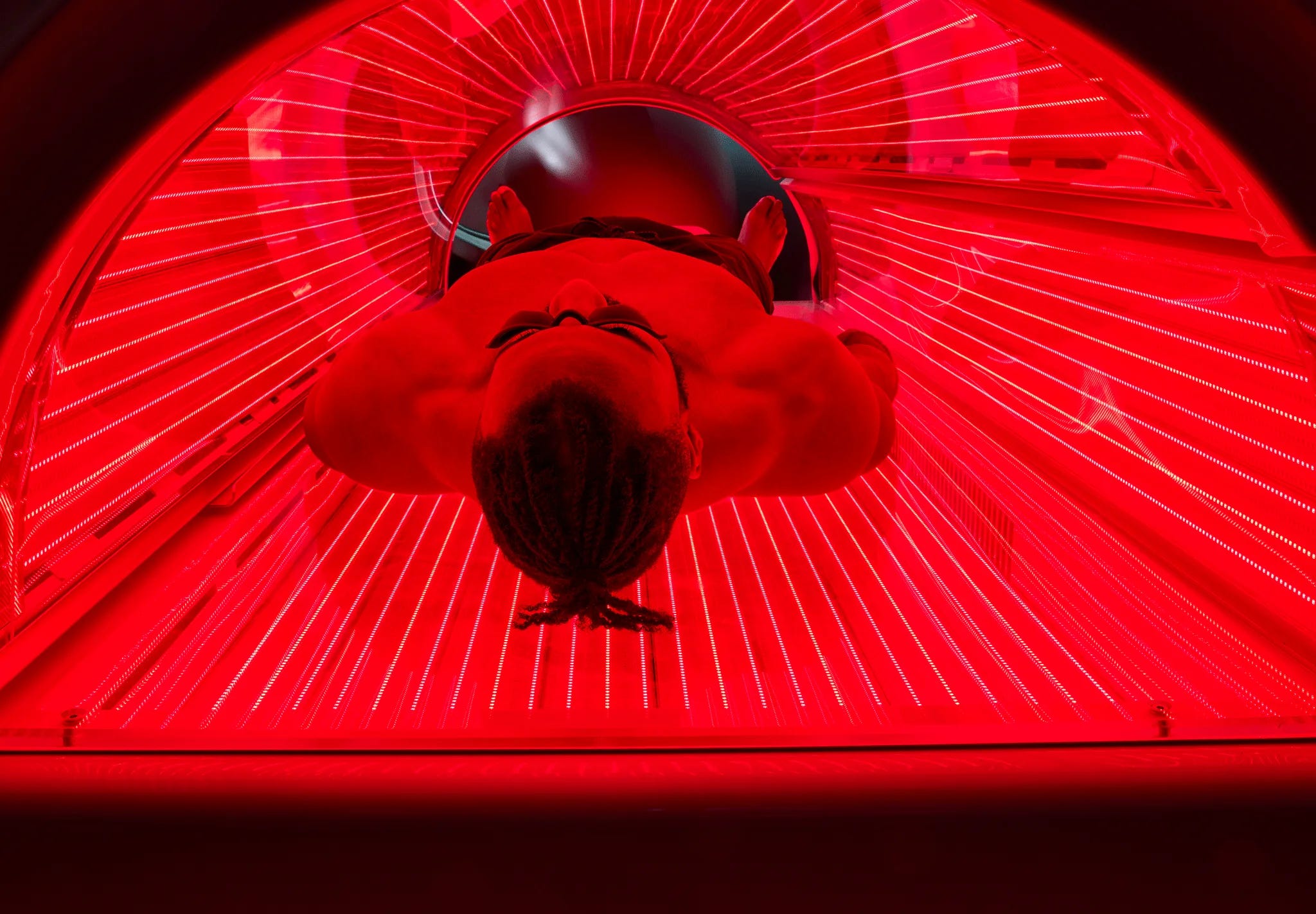
Tanning & Red Light Beds
These devices are great and all but what if you are either unsure or don’t want to commit hundreds to thousands of dollars into one or multiple lights? If this sounds like you, there is another way. You can try before you buy by using full body red light and/or UV tanning beds near you.
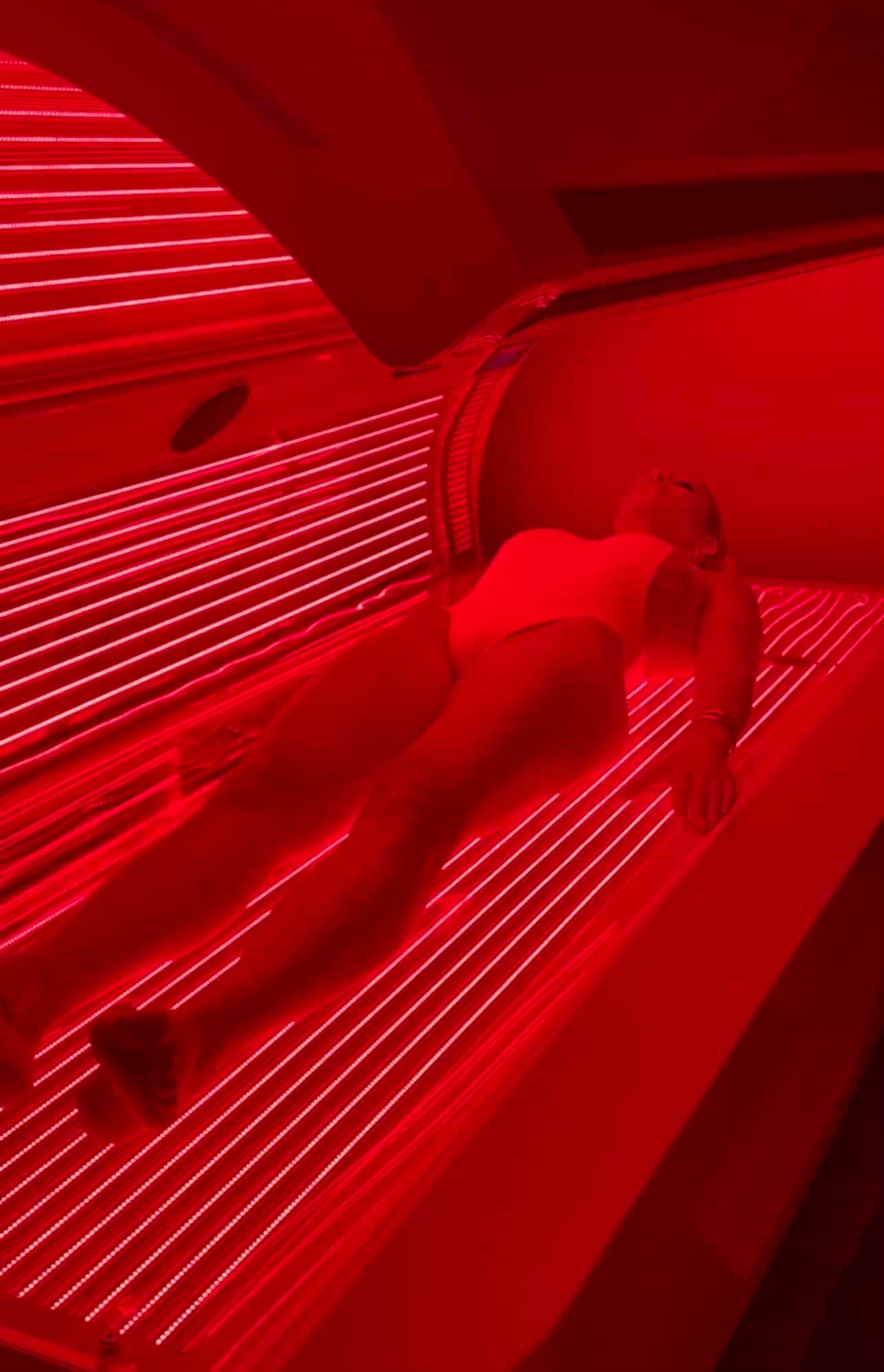
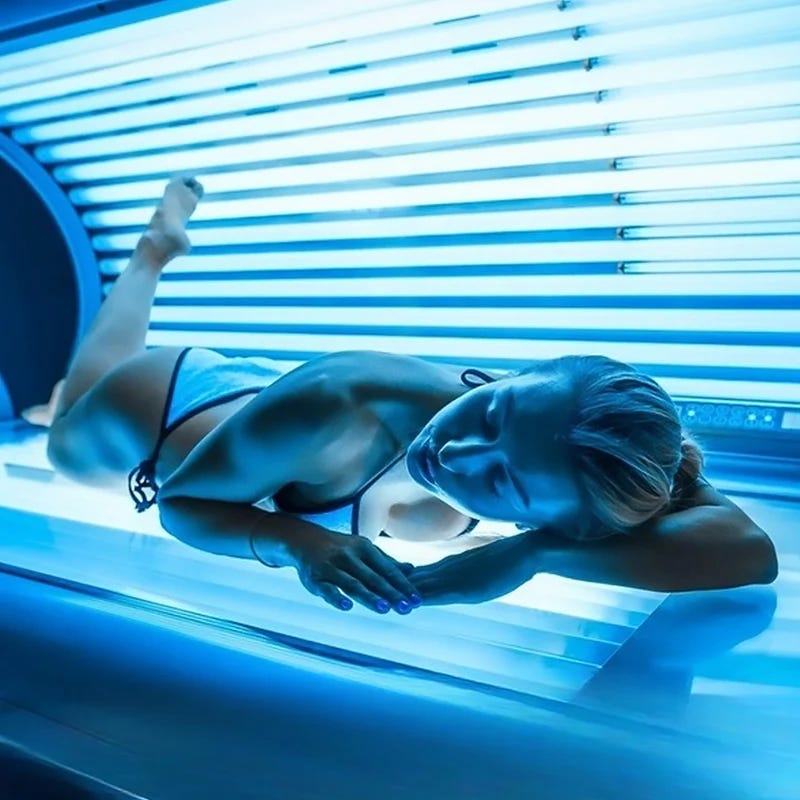
Due to the recent explosion in popularity these have become somewhat common and can be found in massage parlors, chiropractic offices, and “wellness” centers —among other places. UV tanning beds have been around for some time but the red light ones are becoming trendy at the moment.
Some beds combine both, but these are usually just small amounts of red to offset some of the stimulation from the UV. Generally, if you wish to get the full effect of red light you’ll probably have to use a dedicated red light bed. Various establishment will carry both options.
These can give you a glimpse as to how effective light therapies may be for yourself or can be used seasonally. A full body red light bath will almost certainly get a reaction out of you if you’ve never tried any form of light therapy besides sunlight. A UV bath in the midst of winter would probably give you a similar sensation.
If you’re someone who is able to get plenty of direct sunlight (~1+ hour a day minimum) in the summer, these options may be something you utilize during the winter. In this case, other light therapy devices may not be as necessary.
For some people the UV tanning beds are easier to use than the at home lights, considering they can be somewhat hazardous when it comes to overexposure or irritation of the eyes. Tanning salons usually provide protective eyewear and have built in measures so you don’t burn yourself, usually a timer.
The red light beds will also be able to cover your entire body at once. This can be more efficient than moving around or angling mirrors. Many of these beds have questionable strengths and many of the ones you may have heard advertised are lying about how much light they put out. However, the fact that it is shining over the entire body makes the power output less important.
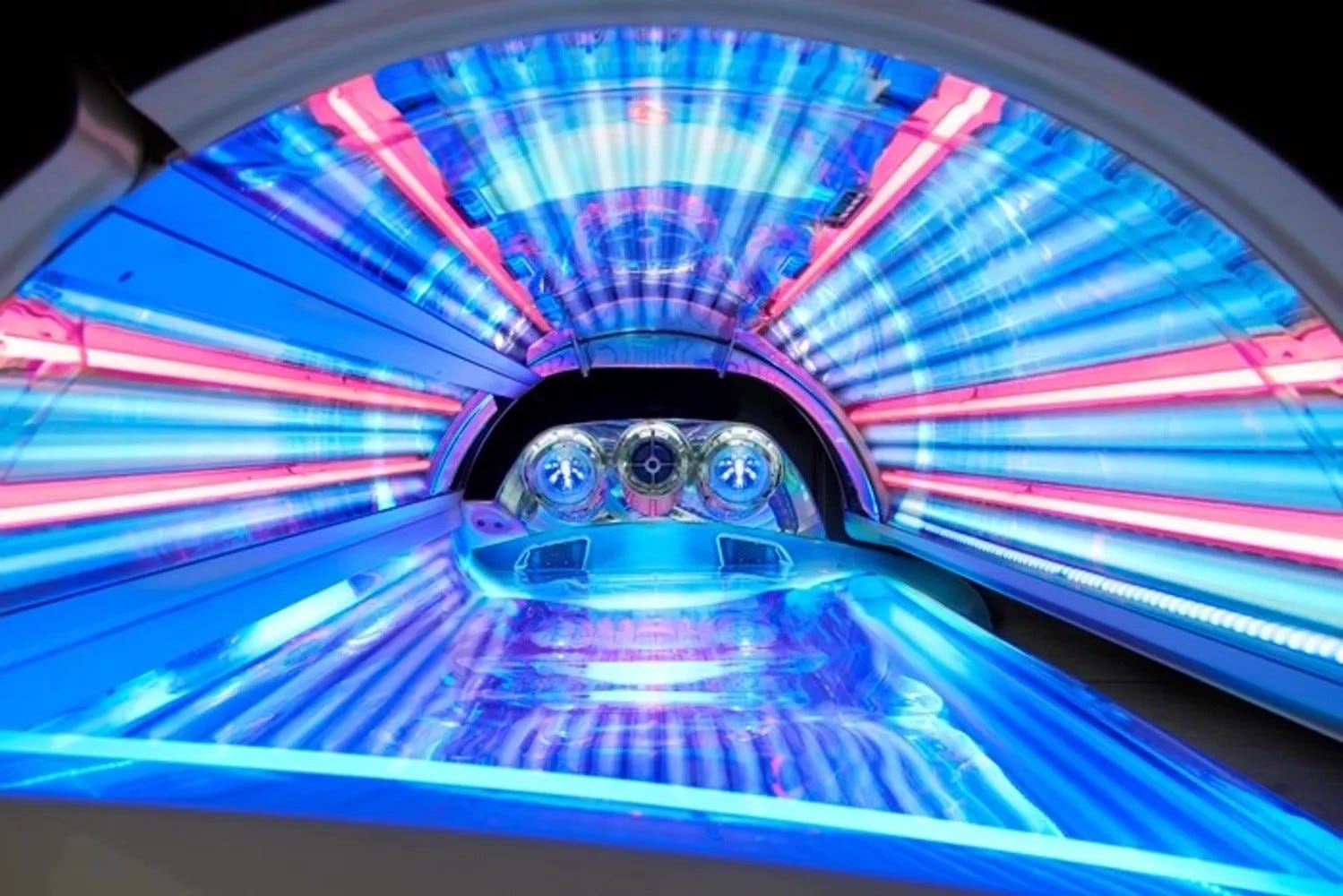
These can also be used on occasion when you’re in need in some sort of stimulus. Say you already own light therapy devices but have suffered an injury or just feel you need something that these other lights can provide. A few sessions in one or both of these types of beds may provide what you need to get back on track.
Ok that should be a fairly comprehensive cover for light therapies. I didn’t even get to cover general illumination strategies for your house and home in order to keep this from being too long. However this should give you a good idea of where to start and what to look for.
Again, what combination of these lights you use will be entirely based on where you live, your life, and your needs. Do you live at a high latitude and have to spend a lot of time indoors? You might need just about all of these types of devices in order to make winters less stressful.
Do you live in a place that has plenty of sun and have the flexibility to be outside? You may only benefit from a wearable device to use on problem areas or certain organs.
Are you unsure of where to begin? You could probably just start with a heat lamp. Few people are ever disappointed with a chicken lamp purchase.
Regardless of what path(s) you choose to take you are unlikely to be dissatisfied. There really isn’t anything that can come close to replicating light when it comes to life. A light therapy device will end up being one of the best investments you make for yourself and possibly even those you care about, even your four legged friends.